Meibomian gland expression – the key to the health of your tear film and clear vision
What are Meibomian glands? Meibomian glands are small glands located in the eyelids that produce the lipid (fatty) component of…

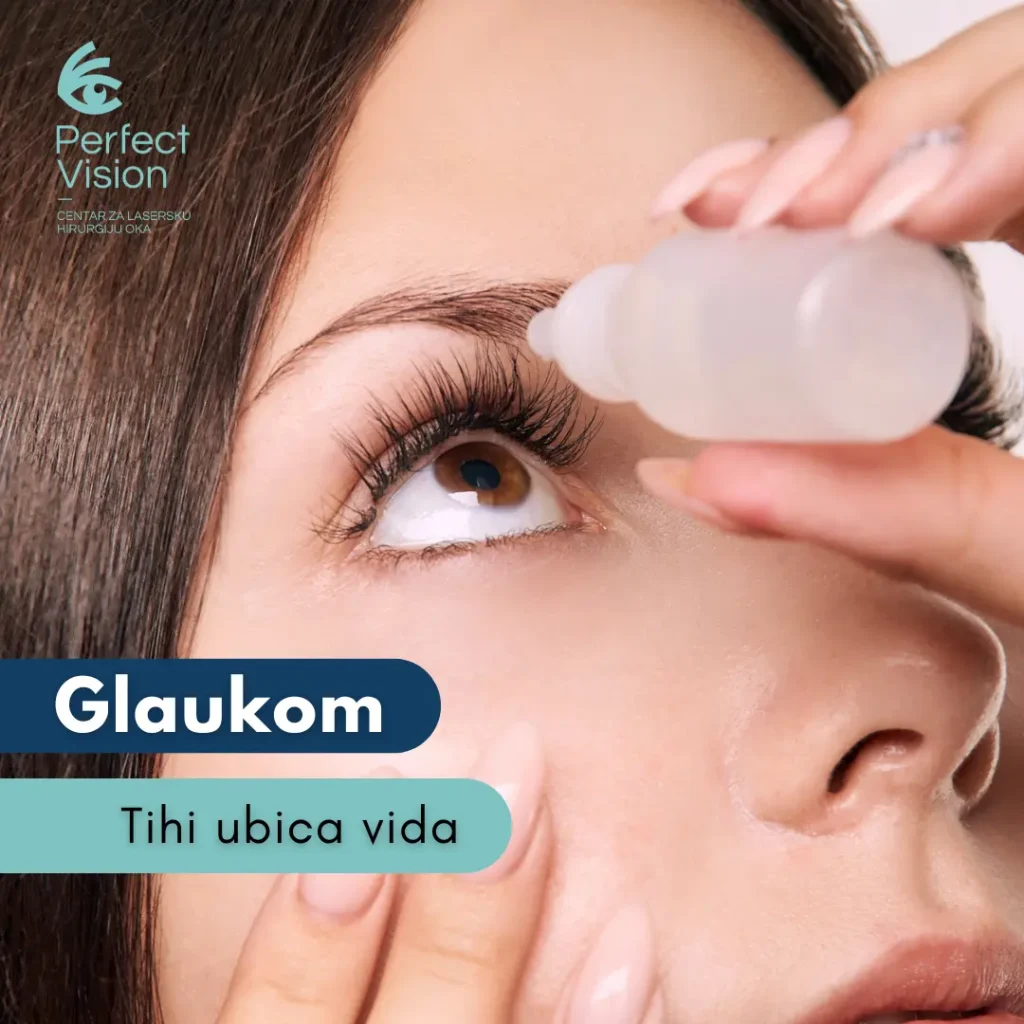
A SILENT thief of sight and another cause of blindness, glaucoma is a disease that affects about 100,000 people in Serbia. It accounts for as much as 30% of all eye diseases and most often does not cause any symptoms, which is why it is often discovered only when the disease progresses.
Degeneration of the optic nerve leads to a narrowing of the field of vision, causing the patient to see through a tube. The problem is that it happens so gradually that the disease is not detected until it reaches advanced stages.

– When the light is strong, the patient can function. Central vision is preserved. Elderly patients often go blind. Precisely for this reason, it is important to perform an examination in a timely manner, in order to detect the disease at an early stage. – says assistant professor Dr. Ivan Marjanović, ophthalmologist and head of the operating block of the Clinic for Eye Diseases at the Clinical Center of Serbia.
* What are the signs of late-stage glaucoma?
– Glaucoma can only be detected by a doctor, during a regular and detailed ophthalmological examination. Even in the later stages of the disease, the symptoms are not expressed, because the loss of the visual field is never in the center of the field of vision. It’s like someone narrowing your field of vision, but ever so gradually, one or two degrees at a time over a few months. The patient unconsciously adapts and for him such a condition becomes “normal”, until he almost reaches the end stage.
* How many types of glaucoma are there?
– Open-angle glaucoma is the most common form of the disease. It occurs when swelling of the aqueous humor through the chamber angle and drainage channels of the anterior chamber is difficult. There are no signs or symptoms other than a gradual loss of vision. Angle-closure glaucoma is an anatomical problem, it occurs when the space through which the aqueous humor drains from the eye is narrowed. It can cause a sudden jump in eye pressure, a “drop” in vision and severe headaches. It is an emergency in ophthalmology.
* Is it always related to eye pressure?
– Most often it is like that. However, glaucoma does not have to be accompanied by elevated intraocular pressure. The disease can occur even when the pressure values are normal. There are also the opposite situations, when the eye pressure values are above the average values, but the patient does not have glaucoma. If it has a genetic predisposition, it is always necessary to monitor and treat high blood pressure in the earliest stages.

* At what stage can the disease be diagnosed?
– Diagnostic procedures are getting better. Previously, the disease was detected only when changes appeared in the field of vision, that is, when 25-30% of the nerve fibers had already died. Then, HRT diagnostics made it possible to detect the disease when 3-5% of the retinal nerve fibers fail, while now OCT made it possible to indicate the existence of the possibility of glaucoma, before the first damages.
* What are the ways to treat it?
– In 60-70% of cases, patients are successfully treated with medication, while 20-30% of cases require surgery, laser or surgical. The success of the treatment depends on the age, the degree of the disease and many other factors. Surgical treatment is the last stage, where a classic operative technique or minimally invasive surgery is applied, which involves the installation of stents or shunts.
* How are glaucoma and cataracts related?
– Cataract is a clouding of the lens, glaucoma is a disease of the optic nerve. At first glance, they have no points of contact, except that they are in the same part of the body. But cataracts can block the natural swelling of the aqueous humor from the eye, leading to a sudden spike in eye pressure. In that case, cataract surgery is simultaneously anti-glaucoma surgery.
* Which method is the “gold standard” for glaucoma?
– It is still a classic, filtering surgery. It has been used in the world for decades, the technique has changed a little, but the principle is the same and involves increasing the outflow of aqueous humor from the eye. There are also procedures that affect the reduction of the production of aqueous humor, but they are more aggressive and generally reserved for the final stages of the disease.
* Can a minimally invasive method be applied instead of classic surgery?
– He can. Those methods reduce the percentage of operative and post-operative complications and allow simpler combinations with cataract surgery. They involve the installation of microstents, which are generally very expensive. For now, there is no possibility of them being applied in state institutions. Depending on the type, stents cost up to 1,000 euros.
* Are there different glaucoma preparations on the market?
– I had the opportunity to see the use of various vitamins injected into the optic nerve, drops and “sugar water” sold as a solution. That is why, on this occasion, I appeal that such “solutions” should not be resorted to. In official medical practice, this does not exist anywhere in the world, and many doctors are shocked that such a thing has even been found in some places in Serbia.

* Can glaucoma be cured?
– It cannot be cured, but only slowed down its progress. Medicines, lasers or surgery can influence the lowering of the eye pressure and thus slow down the progression of the disease, so that the patients can preserve their usable visual function.
Text taken from: http://www.novosti.rs/vesti/lifestyle.304.html:757053-Glaukom-sad-otkrivamo-pre-nego-sto-osteti-vid
Perfect Vision is an Eye Laser Surgery Center located within the Kuća zdravlja Polyclinic, headquartered in Subotica.


Perfect Vision is a Center for Laser Eye Surgery, located within the Polyclinic House of Health, based in Subotica. Visit us!


We have an ISO certificate according to ISO 9001: 2015, registration number 12 100 59137 TMS for the area of Diagnostic, Conservative and Surgical Ophthalmic Services, issued by the certification body TÜV NORD CERT GmbH.