
Meibomian gland expression – the key to the health of your tear film and clear vision
What are Meibomian glands? Meibomian glands are small glands located in the eyelids that produce the lipid (fatty) component of…

When a newly diagnosed diabetic consults an ophthalmologist, which should be the duty of every sufferer, if the eye fundus is undamaged, and it is about type II diabetes, a control will be advised at least once a year as long as there are no changes in the eye fundus, or more often if it is about type I diabetes. Pregnant women are advised to have an eye examination every trimester of pregnancy. If signs of diabetic retinopathy are detected already at the first ophthalmological examination, depending on its stage, the dynamics of further monitoring and therapy will depend. If a diabetic patient is not placed under the supervision of an ophthalmologist at this stage of the disease, precious time can be lost for the timely initiation of laser photocoagulation of the eye fundus, so the disease progresses uncontrollably and irreversibly damages vision.
Damage of the blood vessels of the eye fundus increases their permeability, which leads to leakage of blood and fluid. that is, until the appearance of swelling and the accumulation of fatty deposits. Only when these changes affect the macula (the center of the fundus), does the patient notice a decrease in visual acuity. Diabetic macular swelling is the leading cause of vision impairment in working-age people. About 14% of diabetics have this condition and the prevalence rises to 29% in diabetics who are on long-term insulin therapy. If it is not treated in time, 25% of patients will experience significant and irreversible vision loss in the next three years. Unfortunately, this stage indicates an already advanced disease and can be treated to some extent with injections given in the eye, often combined with laser therapy, which aims to prevent further leakage of blood vessels and to reduce the swelling of the macular, in order to stabilize the visual function.
If it is not started even at this stage treatment, with the further progression of the disease, reduced nutrition of the retina is a stimulus for the creation of new, pathological blood vessels, which also represents the most dangerous complication of diabetic retinopathy, because in the final stage it leads to the most severe visual impairment and eventually blindness. These newly formed blood vessels are of poor quality, they bleed easily, which the diabetic notices as the appearance of “smoke“ in the eye, if the hemorrhage is small, or as a dark spot or curtain in the eye, if the hemorrhage is larger, which is accompanied by severe visual impairment. In the case of minor hemorrhages, laser protection of the fundus is performed, and in the case of larger ones, a very complex and functionally often uncertain operation – vitrectomy. In this way, the disease can be detected at the earliest stage and enable timely laser protection of the fundus, which is today the only real way to treat diabetic retinopathy and safe prevention of serious visual impairment and blindness.
Perfect Vision is an Eye Laser Surgery Center located within the Kuća zdravlja Polyclinic, headquartered in Subotica.
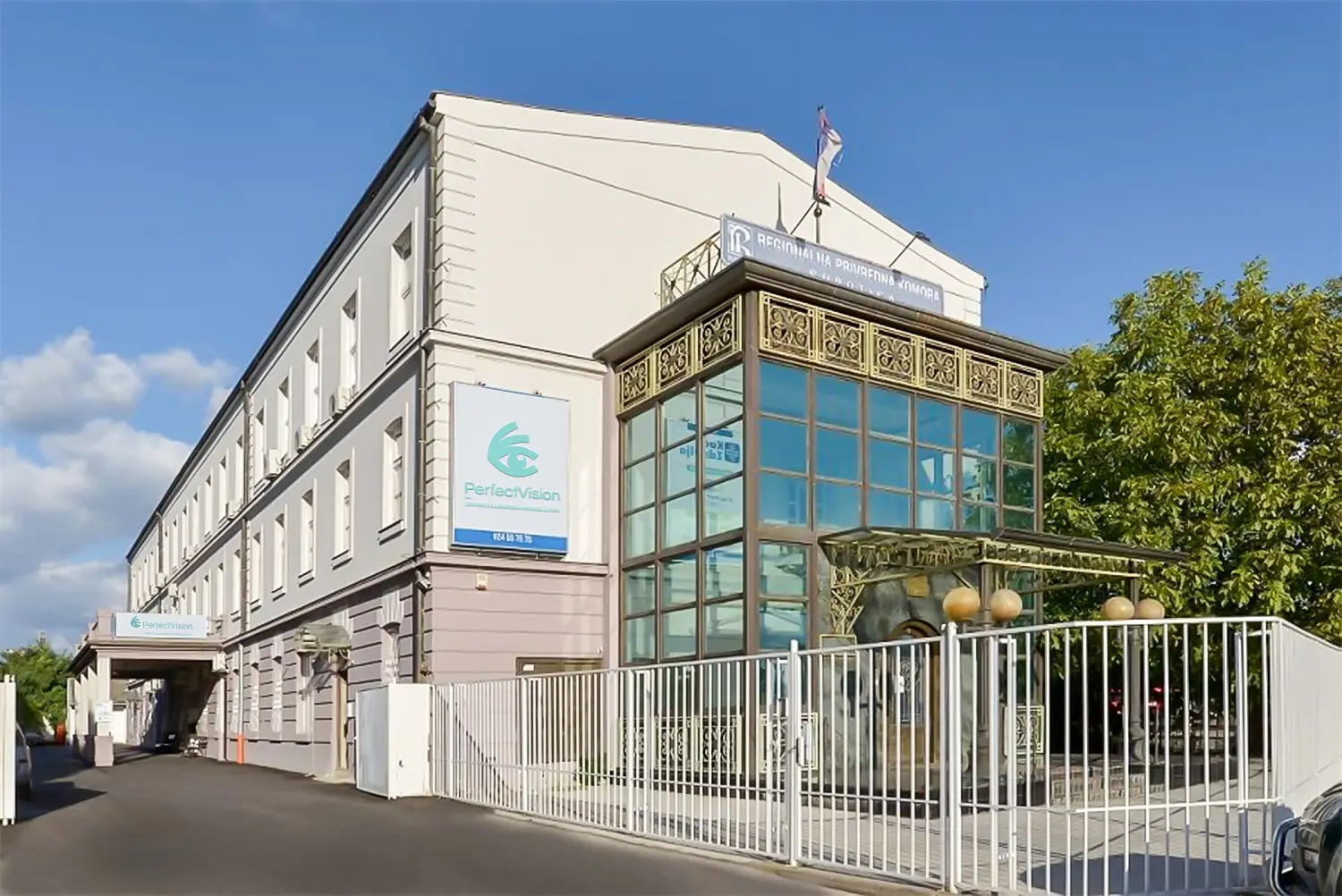


Perfect Vision is a Center for Laser Eye Surgery, located within the Polyclinic House of Health, based in Subotica. Visit us!


We have an ISO certificate according to ISO 9001: 2015, registration number 12 100 59137 TMS for the area of Diagnostic, Conservative and Surgical Ophthalmic Services, issued by the certification body TÜV NORD CERT GmbH.