Meibomian gland expression – the key to the health of your tear film and clear vision
What are Meibomian glands? Meibomian glands are small glands located in the eyelids that produce the lipid (fatty) component of…
In the LASIK method, the surface of the device is separated using a microkerat layer of the cornea by forming a flap or cover, one part of which remains attached to the cornea. The PRK method implies the removal of the entire surface layer of the epithelium without forming a flap. After that, in both methods of laser dioptre removal, excimer laser laser beams remodel the exposed corneal tissue and thus remove the existing dioptre. After the action of the laser in the LASIK method, the flap immediately returns to its place and heals quickly, while in the PRK method, since the surface layer of the epithelium has been removed, it takes several days for it to regenerate and for new epithelial cells to cover the surface of the eye. The end result of laser dioptre removal is identical regardless of the method used to perform the intervention.
| PRK method – advantages | PRK method – Disadvantages |
| Enables laser removal of dioptres even in people whose cornea thickness is insufficient to perform LASIK | Slower recovery than after the LASIK method of removing dioptres – it takes several days for the corneal epithelium to be renewed |
| Better option for patients with poor tear film quality | After LASIK the improvement in visual acuity is immediately visible, while with the PRK method it takes several days |
| There is no risk of complications related to the corneal flap as with the LASIK method of dioptre removal | There is a slightly higher risk of postoperative infection and inflammation with the PRK method of laser dioptre removal |
| The PRK method of laser dioptre removal carries a lower risk of pathological changes in thickness and shape corneas | A few days after PRK methods have more pronounced subjective complaints (swelling of the eyelids, tearing, feeling of discomfort), which disappear after the end of epithelization |
Perfect Vision is an Eye Laser Surgery Center located within the Kuća zdravlja Polyclinic, headquartered in Subotica.
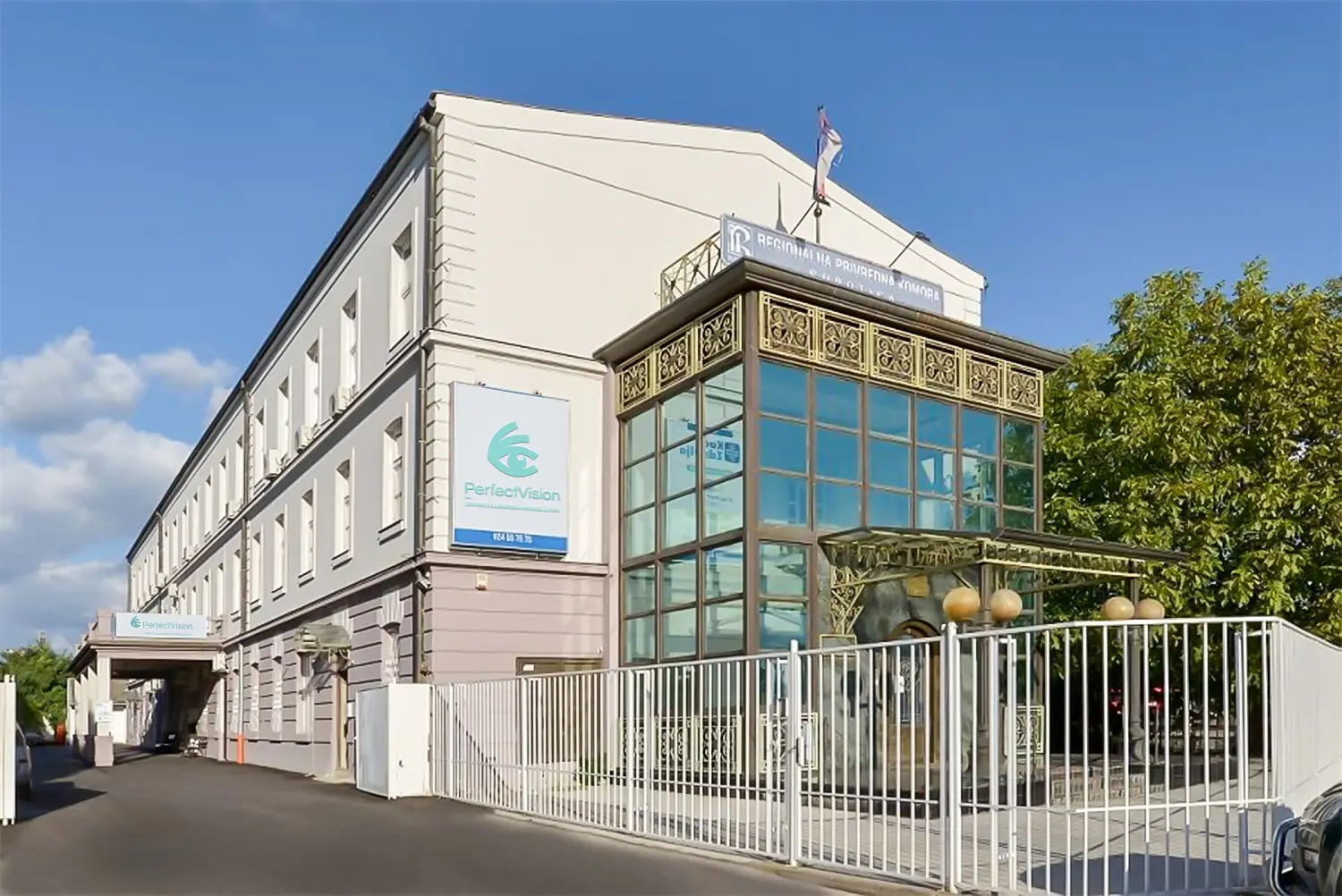


Perfect Vision is a Center for Laser Eye Surgery, located within the Polyclinic House of Health, based in Subotica. Visit us!


We have an ISO certificate according to ISO 9001: 2015, registration number 12 100 59137 TMS for the area of Diagnostic, Conservative and Surgical Ophthalmic Services, issued by the certification body TÜV NORD CERT GmbH.