Meibomian gland expression – the key to the health of your tear film and clear vision
What are Meibomian glands? Meibomian glands are small glands located in the eyelids that produce the lipid (fatty) component of…
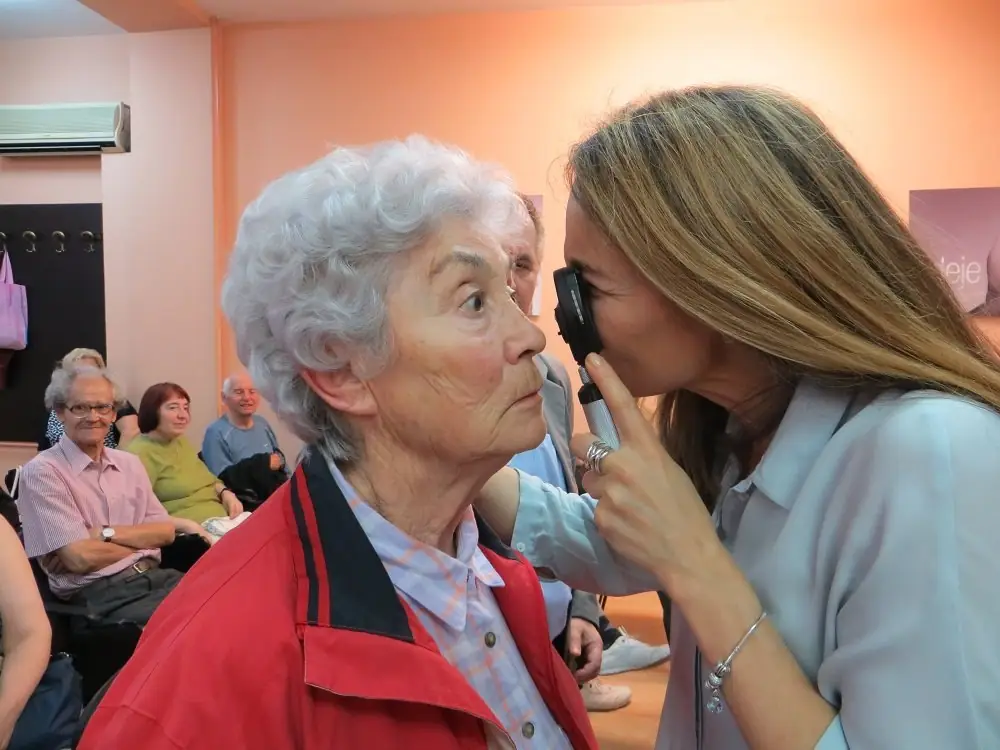
Hyperthyroidism, or disease of elevated thyroid hormone production, in addition to the classic systemic symptoms, can also cause changes in the eyes and adjacent tissue behind the eye. Then the disease is called thyroid ophthalmopathy or Graves’ ophthalmopathy. Symptoms may occur due to the inflammatory process that occurs in the fatty and connective tissue behind the eye, as well as in the muscles behind the eye Some of which are more common: a feeling of dryness of the eye, pronounced blood vessels of the sclera, protrusion of the eyeball, raised upper eyelid, and some less common: inflammation of the cornea due to poor humidification and exposure to air, looseness and the appearance of double images due to inflammation of the eye muscles, as well as glaucoma due to compression on the optic nerve. Ophthalmological examination in patients with hyperthyroidism includes an examination of visual acuity, measurement of intraocular pressure, eye protrusion by exophthalmometry, examination of the eye’s bulbomotor skills, the possibility of proper eyelid closure, measurement of eye dryness and a detailed examination of the fundus of the eye, in order to safely exclude any of the possible symptoms.
Perfect Vision is an Eye Laser Surgery Center located within the Kuća zdravlja Polyclinic, headquartered in Subotica.
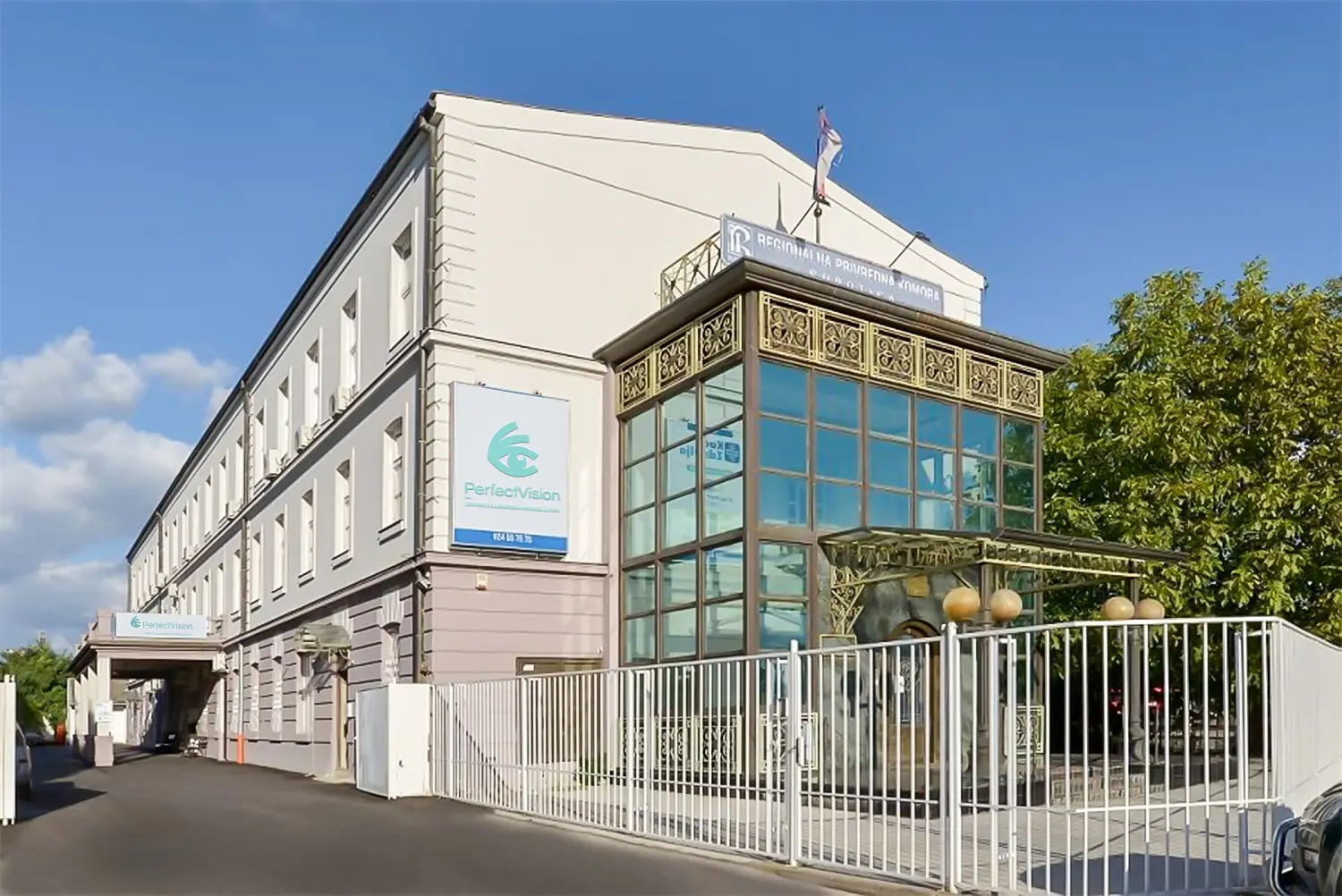


Perfect Vision is a Center for Laser Eye Surgery, located within the Polyclinic House of Health, based in Subotica. Visit us!


We have an ISO certificate according to ISO 9001: 2015, registration number 12 100 59137 TMS for the area of Diagnostic, Conservative and Surgical Ophthalmic Services, issued by the certification body TÜV NORD CERT GmbH.