Meibomian gland expression – the key to the health of your tear film and clear vision
What are Meibomian glands? Meibomian glands are small glands located in the eyelids that produce the lipid (fatty) component of…
The lacrimal apparatus is a complex system responsible for the production and secretion of tears. In the anatomical and functional sense, it consists of a secretory, intermediate and excretory part (Figure 1). The Secretory part consists of lacrimal glands, accessory lacrimal glands (Krauze’s and Müller’s) and goblet cells of the epithelium of the choroid. The lacrimal glands produce tears that have the role of washing away microorganisms and foreign organic or inorganic particles from the surface of the eye. The Intermediate part consists of the tear film that covers the front surface of the eye, the tear river along the edge of the lower eyelids and the tear pond in the inner corners of the eyelids. The Excretory part consists of lacrimal dots located on the inner third of the edges of the lower eyelids, lacrimal ducts that lead tears to the lacrimal sac, and lacrimal-nasal canal that conducts tears from the lacrimal sac to the nasal cavity, i.e. external environment. This is also the physiological path of tear movement.
Figure 1. Component parts of the lacrimal apparatus.
Tears are produced daily in a small and constant amount and this is the so-called basic tear production. In emotional states (excessive joy or sadness) and in case of irritation of the front surface of the eye or the edges of the eyelids, reflexively a larger amount of tears is produced. Tears, sebaceous glands of the eyelids and goblet cells of the iris on the surface of the eye form a tear film (Figures 2 and 3). Its role is to continuously protect and lubricate the front surface of the eye so that the eyelids slide smoothly. The tear film also flattens the surface of the cornea, allowing light to enter the eye smoothly, without refraction. Its role is significant in the transport of nutrient particles as well as mediation in inflammatory processes. It consists of, starting from the outer surface to the front surface of the eye, a lipid, aqueous and mucin layer.
Figure 3. Tear film on the surface of the eye.
Dry eye syndrome occurs as a result of a lack of tears, damage to the tear film or due to increased evaporation of tears from the surface of the eye. It is characterized by a feeling of scratching and the presence of sand in the eyes, a feeling of the presence of a foreign body, burning, burning, dryness, blurred vision, increased sensitivity to light (photophobia) as well as intolerance to contact lenses. It is believed that every third person over the age of fifty suffers from this disorder. The causes of dry eye syndrome are numerous. The most significant among them are age, gender (it occurs more often in women), hormonal instability, systemic diseases such as diabetes and Parkinson’s disease. It often occurs with the use of contact lenses, drugs (antihistamines, anticholinergics, estrogens, isotretinoin, selective serotonin receptor antagonists, amiodarone, nicotinic acid), eye solutions (especially those with preservatives), as part of nutritional disorders (lack of vitamin A), after eye operations, staying in dry, air-conditioned, dusty rooms, etc.
There are numerous tests for examining basal and reflex tear production and outflow, as well as for examining the quality and quantity of the tear film by staining and visualization methods (Figure 4).
Figure 4. Staining tests for testing tear film film.
Dry eye syndrome is difficult to treat, however, symptoms can be alleviated by using preparations known as “artificial tears”. There are many of these preparations on our market, however, their function is based on the same principle – they replace our tears and damaged tear film. These are derivatives of cellulose, complex alcohols, hyaluronic acid and carbomers in the form of solutions or gels. The most useful are those preparations that do not contain preservatives, however, unfortunately, their price is often too high for our capabilities. It is also important to note that in order to alleviate the symptoms of dry eye syndrome, it is necessary to educate oneself about proper hygiene of the edges of the eyelids. If the symptoms are persistent, a satisfactory effect is not achieved with artificial tears and hygiene measures, there is also the possibility of surgical therapy.
Perfect Vision is an Eye Laser Surgery Center located within the Kuća zdravlja Polyclinic, headquartered in Subotica.
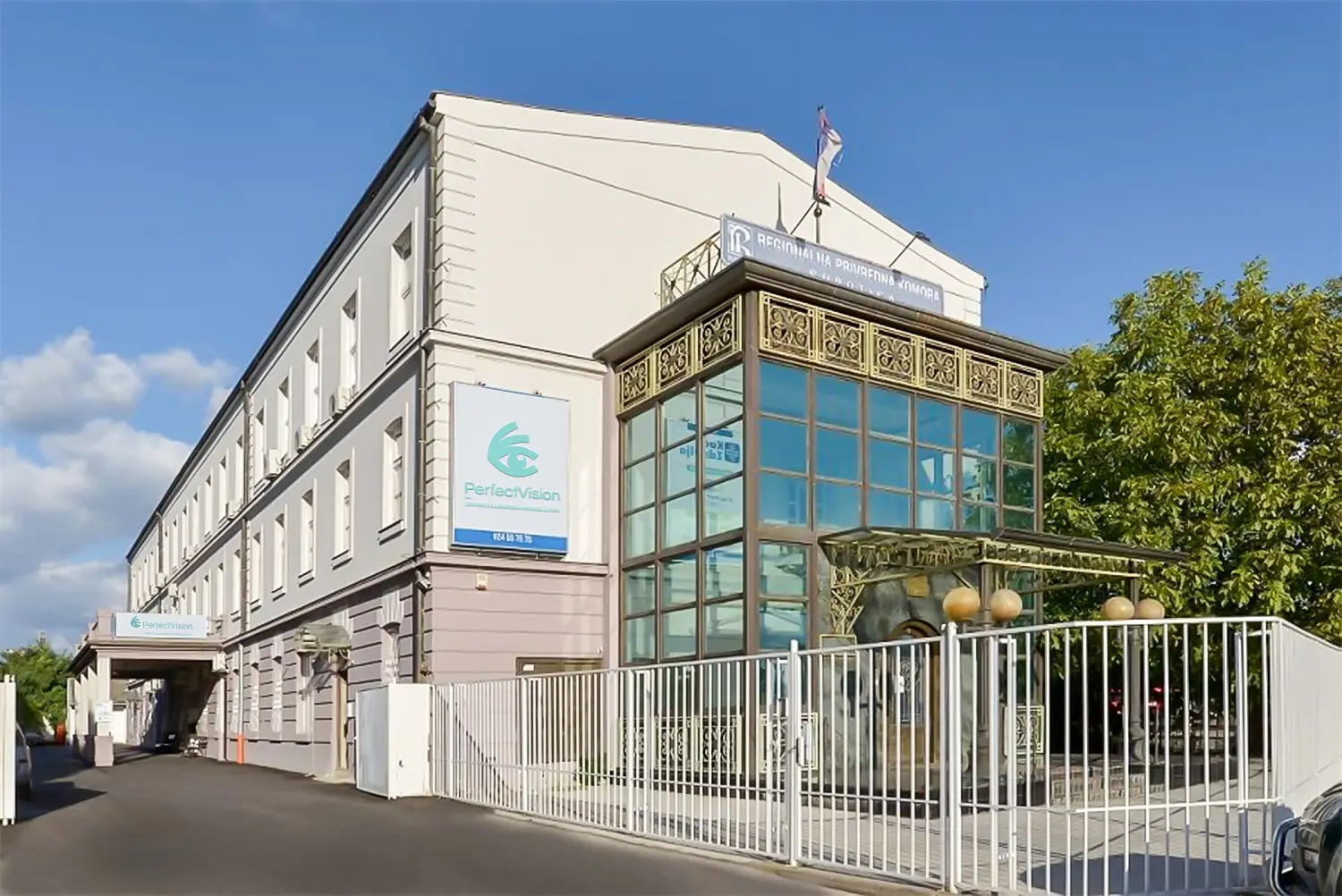


Perfect Vision is a Center for Laser Eye Surgery, located within the Polyclinic House of Health, based in Subotica. Visit us!


We have an ISO certificate according to ISO 9001: 2015, registration number 12 100 59137 TMS for the area of Diagnostic, Conservative and Surgical Ophthalmic Services, issued by the certification body TÜV NORD CERT GmbH.