Meibomian gland expression – the key to the health of your tear film and clear vision
What are Meibomian glands? Meibomian glands are small glands located in the eyelids that produce the lipid (fatty) component of…

Low vision (amblyopia) is the reduction or loss of part of the visual functions, visual acuity, sense of depth of space, mostly in one eye. It belongs to the most common vision pathology in the children’s population. According to previous research, it is present in about 2-5% of the population.
The period in which low vision can develop is from birth to seven years of age. The causes of low vision are in 90% of cases refractive anomalies of the eye (diopter phenomenon), and especially the diopter difference between the two eyes as well as strabismus (farsightedness).

Low vision is manifested by a decrease in visual acuity. As a rule, it usually affects only one eye, which is why children do not complain about impaired vision, because they use the other, better eye.
The highest degree of vision of a healthy eye is perception of spatial depth or stereo vision. Visually impaired people have less pronounced or no stereo vision, the world seems flat to them.
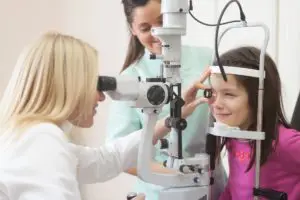
It is very important which tests are used to test visual acuity, because the sensitivity of detecting low vision depends on it. Before this age, it is also possible to detect low vision using special tests for testing visual acuity in children under 3 years of age.
The treatment of low vision depends on the cause, the age of the child, and the severity of the low vision. It lasts until the appropriate visual acuity is reached for the child’s age (as a rule, no longer than the age of 10, and most often up to the age of 7).
Treatment is most successfully carried out by closing the better eye with special eye patches or by instilling drops in the better eye. It is important to note that treatment requires the cooperation of the child, parents and doctor.

The success of treatment depends on when amblyopia is detected. The earlier it is detected, the greater the success of treatment.
If not treated, the visually impaired eye will never regain good vision. The long-term consequence of non-treatment is the risk of vision loss. Low vision leads to a change in the child’s behavior at school, difficulty in reading and later limits the choice of profession.
Perfect Vision is an Eye Laser Surgery Center located within the Kuća zdravlja Polyclinic, headquartered in Subotica.
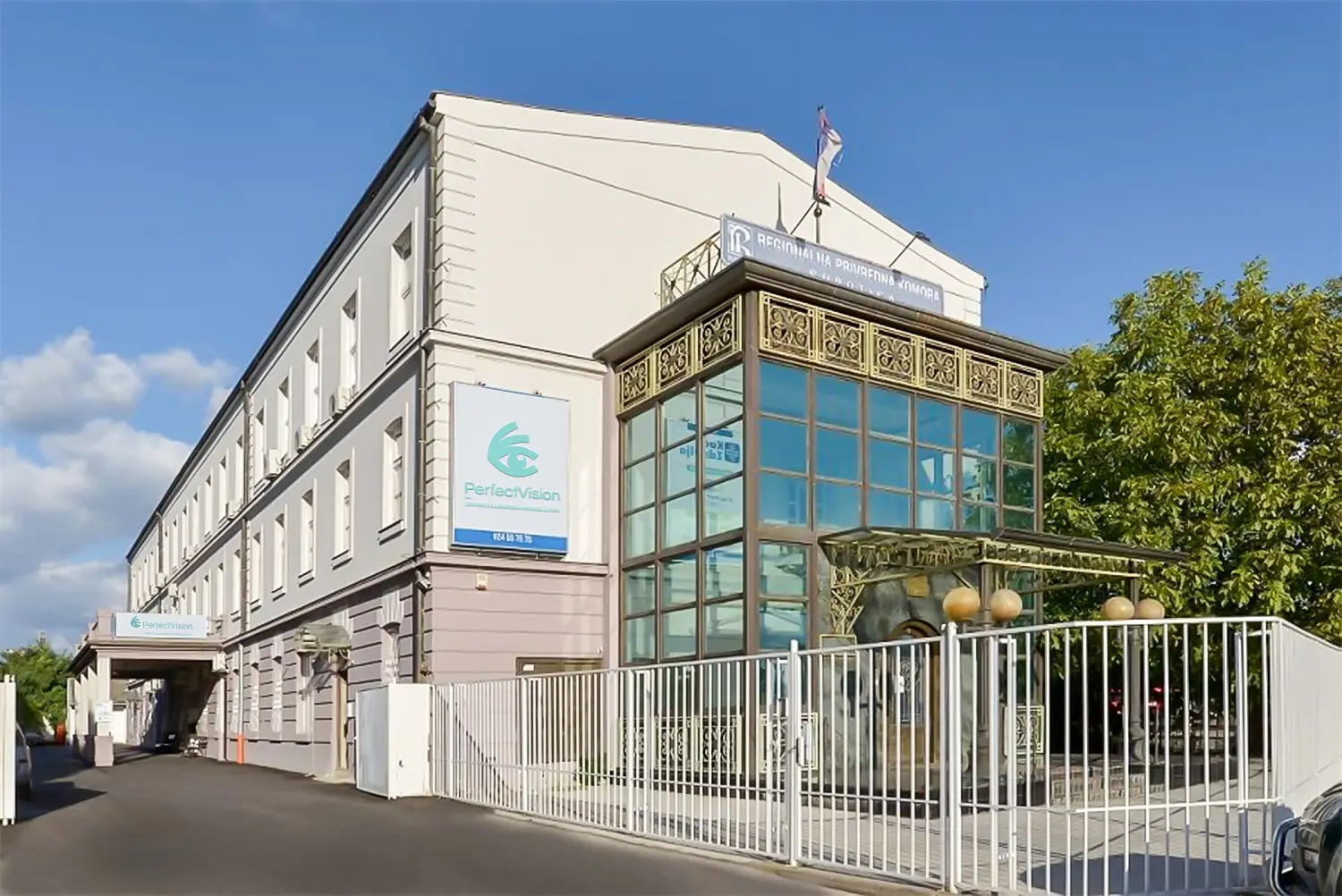


Perfect Vision is a Center for Laser Eye Surgery, located within the Polyclinic House of Health, based in Subotica. Visit us!


We have an ISO certificate according to ISO 9001: 2015, registration number 12 100 59137 TMS for the area of Diagnostic, Conservative and Surgical Ophthalmic Services, issued by the certification body TÜV NORD CERT GmbH.