Meibomian gland expression – the key to the health of your tear film and clear vision
What are Meibomian glands? Meibomian glands are small glands located in the eyelids that produce the lipid (fatty) component of…

What are Meibomian glands?
Meibomian glands are small glands located in the eyelids that produce the lipid (fatty) component of the tear film. Their role is to prevent tear evaporation and provide a stable, smooth layer over the cornea. When these glands do not function properly – called Meibomian Gland Dysfunction (MGD) – dryness, burning, blurred vision and gritty or discomfort and heaviness occur in the eyes.
What is Meibomian gland expression?
Expression of Meibomian glands is a procedure that physically removes blockages from these glands. In this way, the re-passability and normal secretion of fat, which is crucial for the tear film, is enabled.
The procedure involves pressure on the eyelids, usually using special tweezers or instruments, sometimes in combination with previous heating of the eyelids. The treatment can be part of a wider therapy for patients with dry eye or preparation for surgeries such as PRK or intraocular lens (IOL) implantation.
What does the procedure look like?
Preparation: The eyelids are cleaned and a local anesthetic is applied in the form of drops.
Heating: In some cases, controlled heating of the eyelids (warm compresses or special heated masks) is used to soften the secretion and open the gland.
Expression: The ophthalmologist gently presses the eyelids with a special instrument, squeezing out the contents of the Meibomian glands.
Is it painful?
Thanks to local anesthesia in the drops, most patients feel slight discomfort or pressure, but not real pain. The sensation may be unusual, but is generally well tolerated. After the procedure, slight redness or sensitivity of the eyelids is possible for one day.
Who can benefit?
Expression of Meibomian glands is recommended:
People suffering from dry eye syndrome
Patients with chronic blepharitis
Before cataract surgery, especially when the installation of premium intraocular lenses (multifocal, EDOF, etc.) is planned
Before refractive procedures such as PRK, LASIK, SMILE, because the stability of the tear film directly affects the quality of the results
How often is it done?
Depending on the condition of the glands and the severity of symptoms:
Once to several times a year for chronic dysfunction
One to several treatments before surgery can significantly improve postoperative comfort and vision
In some cases, the treatment is repeated for 3–6 months, especially if the dysfunction of the glands is long-lasting and if there is a tendency to re-clogging.
What are the effects?
Patients most often report:
Reducing the feeling of dry eyes and feeling of sand in the eyes
Less blurred vision, especially in the morning
Less need for artificial tears
Improved quality of vision after PRK or IOL implantation
A healthy tear film is critical for accurate preoperative measurements, stable postoperative vision, and less chance of discomfort such as glare, halos, and variable vision in multifocal lens wearers.
Perfect Vision is an Eye Laser Surgery Center located within the Kuća zdravlja Polyclinic, headquartered in Subotica.
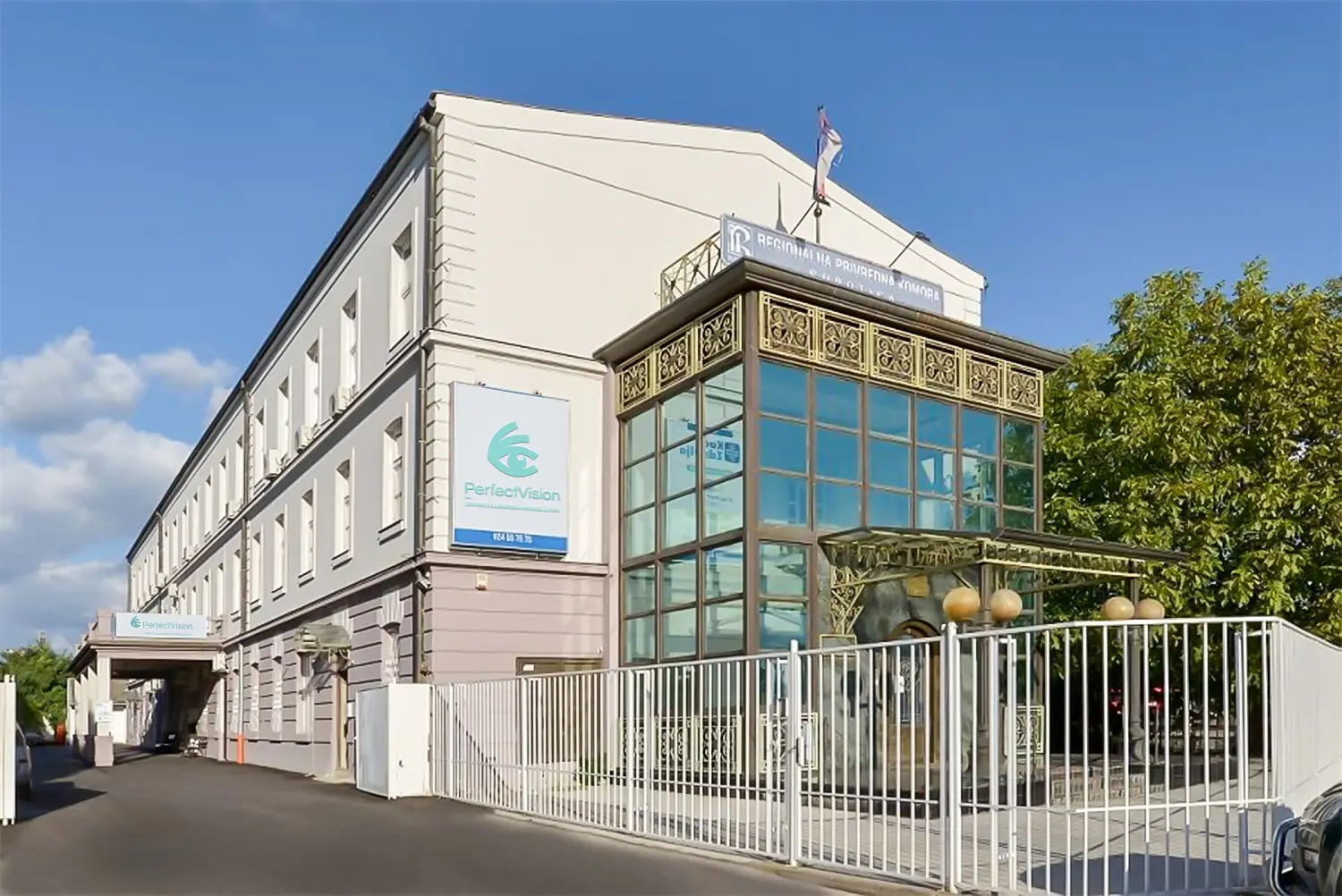


Perfect Vision is a Center for Laser Eye Surgery, located within the Polyclinic House of Health, based in Subotica. Visit us!


We have an ISO certificate according to ISO 9001: 2015, registration number 12 100 59137 TMS for the area of Diagnostic, Conservative and Surgical Ophthalmic Services, issued by the certification body TÜV NORD CERT GmbH.