

What are Meibomian glands?
Meibomian glands are small glands located in the eyelids that produce the lipid (fatty) component of the tear film. Their role is to prevent tear evaporation and provide a stable, smooth layer over the cornea. When these glands do not function properly – called Meibomian Gland Dysfunction (MGD) – dryness, burning, blurred vision and gritty or discomfort and heaviness occur in the eyes.
What is Meibomian gland expression?
Expression of Meibomian glands is a procedure that physically removes blockages from these glands. In this way, the re-passability and normal secretion of fat, which is crucial for the tear film, is enabled.
The procedure involves pressure on the eyelids, usually using special tweezers or instruments, sometimes in combination with previous heating of the eyelids. The treatment can be part of a wider therapy for patients with dry eye or preparation for surgeries such as PRK or intraocular lens (IOL) implantation.
What does the procedure look like?
Preparation: The eyelids are cleaned and a local anesthetic is applied in the form of drops.
Heating: In some cases, controlled heating of the eyelids (warm compresses or special heated masks) is used to soften the secretion and open the gland.
Expression: The ophthalmologist gently presses the eyelids with a special instrument, squeezing out the contents of the Meibomian glands.
Is it painful?
Thanks to local anesthesia in the drops, most patients feel slight discomfort or pressure, but not real pain. The sensation may be unusual, but is generally well tolerated. After the procedure, slight redness or sensitivity of the eyelids is possible for one day.
Who can benefit?
Expression of Meibomian glands is recommended:
People suffering from dry eye syndrome
Patients with chronic blepharitis
Before cataract surgery, especially when the installation of premium intraocular lenses (multifocal, EDOF, etc.) is planned
Before refractive procedures such as PRK, LASIK, SMILE, because the stability of the tear film directly affects the quality of the results
How often is it done?
Depending on the condition of the glands and the severity of symptoms:
Once to several times a year for chronic dysfunction
One to several treatments before surgery can significantly improve postoperative comfort and vision
In some cases, the treatment is repeated for 3–6 months, especially if the dysfunction of the glands is long-lasting and if there is a tendency to re-clogging.
What are the effects?
Patients most often report:
Reducing the feeling of dry eyes and feeling of sand in the eyes
Less blurred vision, especially in the morning
Less need for artificial tears
Improved quality of vision after PRK or IOL implantation
A healthy tear film is critical for accurate preoperative measurements, stable postoperative vision, and less chance of discomfort such as glare, halos, and variable vision in multifocal lens wearers.
You asked us about glaucoma, Dr. Aleksa Milić answers your questions.
Glaucoma is a chronic progressive disease and therapy is used until the end of life.
If glaucoma is not adequately treated, in its terminal stage glaucoma can lead to blindness.
Yes, glaucoma can be operated on to reduce intraocular pressure.
Glaucoma cannot be cured, but the progression of the disease can be prevented with adequate therapy.
No, laser iridotomy does not improve vision, but in patients who are candidates for laser iridotomy, it contributes to better control of intraocular pressure.
For the majority of the population, normal values of eye pressure are 10-21 mmHg.
It is very important to use the therapy regularly, if the patient forgets to take the therapy, it is necessary to continue taking the therapy as prescribed by the doctor.
Laser iridotomy is a procedure in which a small opening is made in the iris with the power of a laser for a better flow of aqueous humor.
Laser iridotomy is performed under drip anesthesia, but slight pain or discomfort may be felt.
Glaucoma can be hereditary in a certain percentage, so it is necessary to do ophthalmological examinations once a year if someone in your family has glaucoma.
After cataract surgery, in most cases there is a slight drop in eye pressure.
Although glaucoma is predominantly a disease of the elderly population, it can be diagnosed at any age, even in the first days of life.
Certain systemic therapy can lead to a jump in intraocular pressure, most commonly corticosteroid therapy. Also, the application of topical corticosteroid therapy in the eye can lead to a jump in intraocular pressure in certain people.
Immediately after laser iridotomy, the vision may be blurred, so it is not recommended to drive after the intervention.
If the openings made on the tendon are closed or the doctor judges that they are not large enough, the intervention can be repeated.
Blood pressure values do not affect eye pressure, however people with lower blood pressure, people prone to variations in blood pressure, as well as those with poorer peripheral circulation may be more prone to developing glaucoma.
In the spirit of the saying that the world rests with the young 12.06.2025. In 2008, a cataract surgery course was held at the Hilton Hotel in Belgrade, to which Dr. Branka Ivošević, chief and executive director of the Center for Laser Eye Surgery Perfect Vision, was invited as an instructor as one of several experts from the country.
Our Dr. Miljana Smiljić is among the small number of young ophthalmologists who have had the opportunity to learn the technique of ultrasound cataract surgery on artificial eyes from the best surgeons in Serbia. In this course, she demonstrated outstanding manual skills and great dedication.
It was a great honor and pleasure for us to be trusted by the Association of Refractive and Cataract Surgeons of Serbia, headed by Prof. Dr. Miroslav Stamenković, and the company Amicus, which was the technical support of this wet lab, to pass on the knowledge gained in this field for decades to young people.
Perfect vision, which brings together a team of 13 ophthalmologists and 11 ophthalmic surgeons every year…
Laser removal of dioptres is the most frequently performed operation at the request of patients, and in three decades, millions of people have permanently gotten rid of glasses or contact lenses in this way, which speaks volumes about how safe and effective this operation is.
We have selected some of the most common questions asked by our patients in order to dispel some prejudices and fears, said Dr. Branka Ivošević, Chief Executive Officer of the Pefect Vision Laser Eye Surgery Center.
1. Does dioptre removal by the PRK method (photoreactive keratectomy) remove the dioptre permanently?
In most cases, the dioptre is removed permanently, in a small percentage, a smaller part of the dioptre may return over time, which can be easily removed with retreatment.
2. Can astigmatism be removed with a laser?
Apart from plus and minus diopters, i.e. farsightedness and shortsightedness, the laser can also remove astigmatism – the irregular curvature of the cornea up to +/-5.0 diopters.
3. Is the PRK method of laser dioptre removal safe?
By using modern lasers that have an eye tracking system for tracking the eye, the laser emits UV rays, according to a predefined schedule at a speed of 2.5 seconds per dioptre without the possibility of any error, removes the given dioptre.
4. Can I remove diopters with a laser if I do not have stereo (spatial) vision?
People who are visually impaired have proportionally reduced stereo vision, and after laser dioptre removal in some cases stereo vision can be improved to a lesser extent, but just as low vision is not treated with a laser, the same applies to stereo vision.
5. What tests and imaging do I need to do in preparation for laser dioptre removal?
The examination begins with an anamnesis – a conversation with the patient during which we learn the necessary details about the dioptre, whether the patient wears glasses or contact lenses, whether he suffers or has suffered from any eye diseases or other diseases, whether he has had previous eye injuries and surgeries. After that, we record diopters on narrow and wide pupils, perform topography (mapping of the cornea) and imaging of the fundus (optical coherence tomography).
6. Is the examination for laser diopter removal painful and how long does it take?
This examination is completely safe and painless and lasts about 2.5 hours.
7. How long are the results of the examination valid?
We advise patients if the operation is prolonged by more than 6 months compared to the date of the examination, to perform the examination again.
8. For this type of surgery, it is necessary that the diopter is stable, what should I do if my diopter varies?
It is necessary for the diopter to be stable for one year before the operation.
9. What eye and eye diseases and conditions might make me not a suitable candidate for this surgery?
Some of the contraindications for laser diopter removal surgery are a thin cornea, corneal diseases such as keratoconus, corneal inflammation (keratitis), corneal scars, extremely dry eyes, clouded lens (cataract), diseases of the fundus and connective tissue diseases called collagenosis.
10. Can I perform laser dioptre removal surgery after strabismus surgery and vice versa?
Laser dioptre removal surgery can be performed after complete recovery from strabismus surgery and also after laser dioptre removal when vision and condition of the cornea are completely stabilized, i.e. after at least 4 months, strabismus surgery can be planned.
11. Can a laser surgery to remove dioptres be performed in patients with Hashimoto’s thyroiditis?
Well-controlled Hashimoto’s thyroiditis is not an absolute contraindication for laser removal of dioptres.
12. Can this operation be performed in the summer months when temperatures are high and UV radiation is high?
This type of operation is performed throughout the year, but it is necessary to wear glasses with the maximum degree of protection against UV radiation after the operation.
13. Can people who have keratoconus (a corneal disease of unknown cause) undergo laser surgery to remove diopria?
Opinions are divided as to whether these individuals are suitable candidates for this operation. According to some CXL-cross linking treatment, the cornea is strengthened immediately before or a few months before the laser removal of the diopter and the removal of the diopter is done, but the results in terms of the regularization of the affected cornea and the improvement of vision are often unpredictable, so the opinion of many ophthalmologists is that laser removal of the diopter is not performed in the case of keratoconus, but the diopter is corrected with techniques that do not additionally thin the cornea, such as corneal rings (which are implanted in the cornea), fake intraocular lenses that are implanted in front of or behind the iris or implantation of affective intraocular lenses.
Achieving good vision after laser dioptre removal requires an evaluation of the patient, a detailed discussion of the patient’s wishes and needs, an insight into the health of the eyes and the body as a whole, taking into account the strict criteria that dioptres can be removed by laser, carrying out numerous diagnostic procedures, informing the patient well about the preparation, surgery and recovery so that the patient gets what he expects, crystal clear vision without glasses and contact lenses.
Summer is a time when we look forward to sunshine and warm days, but it is important to know that exposing your eyes to UV radiation can have serious consequences for your vision. In order to protect your eyes, not only from UV radiation, but also from glare and glare, you need to choose quality sunglasses with UV protection and polarization .
UV (ultraviolet) radiation is invisible radiation from the sun’s rays that can cause serious eye damage. There are three types of UV radiation: UVA , UVB and UVC . UVC radiation is stopped in the ozone layer, while UVA and UVB reach the Earth’s surface and can damage the eyes.
Long-term exposure to UV radiation can cause damage to the cornea, lens and retina, which increases the risk of cataracts, macular degeneration and pterygium . Therefore, it is important to wear glasses with adequate UV protection.
Optika Perfect Vision offers a wide selection of sunglasses with certified UV protection , ensuring a safe and carefree stay in the sun.
Polarization is a technology that filters out the horizontal light waves responsible for reflection from surfaces such as water, snow, road or glass. Polarized sunglasses reduce glare and glare, providing clearer and sharper vision.
This is especially important when driving, doing sports and being outdoors, where clear vision affects safety and comfort. Perfect Vision Optics offers a wide selection of polarized glasses that effectively eliminate glare and preserve the comfort of your vision.
Eyes are irreplaceable organs and their protection must be a priority. When choosing glasses, always check if they have certified UV protection and polarization , to prevent damage and improve vision clarity.
Visit Optika Perfect Vision within the House of Health in Subotica and find glasses that will protect your eyes in the best way. During the month of August, by purchasing sunglasses, you automatically participate in the raffle and have the opportunity to win a travel voucher in the amount of 30,000 dinars .
Don’t wait – protect your eyes and enjoy the magic of summer without worry!
Laser dioptre removal is an intervention that quickly and reliably removes dioptres and enables clear vision without wearing glasses and contact lenses. However, not all patients are suitable candidates for this operation. There are certain conditions that must be met, and one of them relates to age .
The lower age limit for laser diopter removal is in most cases 20 years . It is considered that during this period growth and development ends, and that the diopter will not change in most patients.
The upper age limit is difficult to define precisely. It is conditioned by the appearance of presbyopia (senile diopters for nearsightedness), which most often begins after the age of 40, but also by other eye diseases, such as cataracts .
Presbyopia occurs as a result of changes in the eye lens, whereby its elasticity and refractive power decrease, as a result of which there is a need to wear close-up glasses. The intervention of laser dioptre removal cannot permanently remove senile dioptre , nor can its occurrence be prevented. Therefore, patients who have previously had this surgery will need to wear glasses when presbyopia develops.
After the age of 50, cataracts often appear – clouding of the natural lens of the eye, as a result of which visual acuity decreases. It is not possible to remove cataracts with laser dioptre removal, nor to prevent its formation. For this reason, this operation is not recommended for people over 50 years of age, as it will have a short-term effect. As the cataract progresses, another operation will be needed.
Patients after 45-50 years of age are advised another type of surgery – implantation of intraocular lenses , which permanently achieves good vision without glasses. This procedure gives the patient freedom in everyday life and eliminates dependence on glasses.
There is a wide range of intraocular lenses, which differ in their characteristics and, accordingly, in the quality of vision after surgery. Our center is a leader in the implantation of premium intraocular lenses and one of the few clinics that implants all types of lenses: monofocal, lenses with an extended range of vision and multifocal lenses, from different manufacturers.
Laser dioptre removal is an increasingly popular method of permanently correcting dioptres and achieving good vision without glasses and contact lenses.
There are many prejudices related to laser hair removal. One of them is that the surgery leaves permanent effects on vision, such as chronic dry eye.
Dry eye occurs in some patients as one of the complaints in the early postoperative period. Most often, these disturbances last one to two weeks after the procedure, with a tendency to decrease day by day. In rare cases, when the patient has a predisposition, i.e. decreased secretion of tears from before, the disturbances may last for several months.
If you are planning laser eye removal in advance, this should not discourage you, since an experienced surgeon will suggest measures and medications that will increase the moisture of the eyes and the feeling of comfort.
When a person does not have enough tears or the tears are of poor quality, it becomes difficult to moisten and lubricate the surface of the eye. We call this condition dry eye syndrome .
Previously, dry eye syndrome was far more common in the elderly population. Today, due to the daily use of computers and mobile phones, the symptoms of dry eye are increasingly felt by younger patients.

Dryness of the eye is one of the most common complaints that occurs during recovery after laser dioptre removal, which can prolong the stabilization of visual acuity after surgery.
Research results show that in more than half of operated patients, these symptoms disappear 7 days after the operation. In 10% of operated patients, these side effects can last up to 6 months after the operation.

And patients with a weaker tear film can be good candidates for laser ablation.
It is very important to perform a test as part of the examination to check whether the lacrimal glands secrete a sufficient amount of tears. The most famous tests for examining dry eye are:
Recommendation: with a weak tear film, preference is given to the PRK method .

After each operation, recovery time is required. By following the above measures and therapy, recovery after laser diopter removal will be faster and more comfortable. Focus on the benefits of the operation and enjoy clear vision without glasses and contact lenses.
During pregnancy, numerous changes occur in a woman’s body. Thus, “another state” can also lead to certain changes in vision, due to water retention, most often in the cornea. This is especially pronounced in the 3rd trimester of pregnancy.
These are mainly temporary diopter changes (most often in myopic persons) that gradually disappear after childbirth or cessation of breastfeeding. However, there are more serious situations in which it is necessary to seek the advice of an eye doctor.
One of the most common ophthalmological diagnoses in pregnancy is “false myopia” or pseudomyopia. It is caused by a spasm or excessive strain of the accommodative muscle that allows us to distinguish objects regardless of their distance, since the entire organism of a pregnant woman works under a greater load. Also, during pregnancy, the number of blinks decreases, which also adversely affects image sharpening due to eye dryness.
It is important to emphasize that these diopter variations are temporary and most often not drastic. Therefore, in most cases, new glasses are not needed.
Women who wear contact lenses often complain that contact lenses bother them during pregnancy. This happens due to swelling of the cornea due to the accumulation of fluid and the general increased sensitivity of the whole organism during the second condition. 
If you notice that the image is not clear with contact lenses, there is no need to change the diopter. It is probably false myopia that will disappear quickly. A temporary solution may be to wear glasses or contact lenses for a short period of time, following these tips:
• avoid sleeping with lenses even for a short time
• pay more attention to hygiene measures when maintaining lenses
If the feeling of discomfort does not decrease, be sure to consult your ophthalmologist. The doctor may prescribe artificial tears that can be combined with contact lenses or lens care products that contain humectants, which can relieve the feeling of dryness and irritation.
Due to the accumulation of fluid, a slight swelling of the eyelids may occur or the upper eyelid may droop slightly. Changes in hormones can lead to dark discoloration of the eyelids or the appearance of dilated capillaries on the eyelids.
All the mentioned changes are short-term, ie. they retire after giving birth.
Due to hormonal changes and changes in the composition of the tear film, severe eye dryness can occur during pregnancy and breastfeeding.
Ask your ophthalmologist which eye drops you can use to improve eye moisture and are safe for pregnant and/or nursing women. It is preferable to choose artificial tears without preservatives. Follow the general advice to blink as often as possible and take regular breaks while working on the computer.
Pregnant women with diabetes are advised to have dilated examinations in each trimester of pregnancy. Worsening of diabetic retinopathy is very common during pregnancy, so regular monitoring of the condition of the fundus is necessary.
Be sure to schedule an ophthalmological examination at the beginning of pregnancy or even during the pregnancy planning period, if you have been diagnosed with glaucoma . Often, the condition of the disease improves during pregnancy, so it is necessary for the ophthalmologist, if deemed necessary, to correct the existing therapy. 
You should consult an ophthalmologist immediately if you notice any of the following symptoms during pregnancy:
• blurred vision
• sensitivity of the eyes to light
• flashes, lightning, shining before the eyes
• “flies”, “tips” or dots that swim in the eye
• spots or flickering before the eyes
• drawing the “curtain” in the field of vision
• swollen eyelids
• pain or redness in the eye
• scratching or feeling of a foreign body in the eye
Pregnant women with high myopia should have an examination of the periphery of the fundus before giving birth. If necessary, the ophthalmologist will perform laser protection of the fundus in a timely manner.
During this examination, the ophthalmologist will assess the risk of natural birth of degenerative changes on the periphery of the retina, will advise a caesarean section due to the risk of retinal rupture and retinal ablation (detachment).
Pregnancy and breastfeeding are contraindications for laser diopter removal. It is not recommended to remove diopters 6 months after giving birth, during pregnancy and breastfeeding, as well as 6 months after childbirth and/or cessation of breastfeeding. Possible reasons for this are changes in diopters, pronounced dryness of the eye, as well as thickening of the cornea due to fluid retention.

Multifocal intraocular lenses are an ideal solution for people older than 40-45 years who need to wear two pairs of glasses, for distance and for near.
By installing multifocal lenses, it is possible to achieve multiple effects:

Because of all of the above, more and more patients decide to undergo surgery with the installation of multifocal intraocular lenses. One of them is Goran Vuletić (44), who underwent surgery on both eyes at the Center for Laser Eye Surgery Perfect Vision.
Goran lives and works in Skopje (Macedonia). He traveled more than a thousand kilometers to have an operation in our clinic to get rid of his glasses and contact lenses.
“In Skopje, I visited as many as three clinics looking for a solution to my vision problems. However, the prices of operations are very high, and frankly, I don’t have a lot of trust in Macedonian ophthalmologists. I found the Perfect Vision clinic, which suited me in every way, and regardless of the distance of 1,200 kilometers, I decided to have the surgery there .” – Goran begins his story.
Goran came to the clinic motivated to do laser diopter removal. Since the age of 14, he has had a dioptre that has now reached -2.0. He combined glasses with contact lenses, but over time the lenses began to bother him.
After a detailed pre-operative examination with all the necessary diagnostic imaging, Goran was advised surgery with the installation of multifocal lenses as the best solution due to the established presbyopic diopter for reading.
“Dr. Branka Ivošević explained to me that even though I don’t have cataracts now, I will get them in time, like everyone else. This cannot be prevented with laser dioptre removal, so in a certain number of years I would have to do another operation with the installation of intraocular lenses because of the cataracts. So practically, with this operation, I will save both time and money.” – pointed out Goran.

The surgery on both eyes was performed 7 days apart. On the day of the operation, Goran was excited, with a small dose of positive trepidation. Relaxing in the preparation room, he had the opportunity to hear first-hand the experiences of already operated patients, which further encouraged him.
He left the operating room with a smile:
“It went great! I had absolutely no pain. At one point, the doctor announced that I would feel a slight pressure in my eye when she inserted the lens, but I didn’t even feel that. They fulfilled my musical wish, we listened to Mozart during the operation.”
7 days after the right eye surgery, the left eye surgery was scheduled. Goran stated that the recovery is going well, without pain, itching and scratching, but his vision in the operated eye was still a bit blurry at that moment.
At the check-up after a week, Goran’s visual acuity of 1.0 confirmed that he now sees 100%.
“What can I say, I don’t need glasses anymore! I’m still getting used to this feeling, so I often move my hand to adjust the glasses. I’m satisfied, everything was really up to par and I’ll be happy to recommend you .” – Goran finished his confession.
Center for laser eye surgery Perfect Vision is at the top when it comes to surgery with the installation of multifocal intraocular lenses. Dr. Branka Ivošević is a domestic surgeon with the largest number of implanted multifocal (trifocal) intraocular lenses in Serbia.
Goran is just one of our satisfied patients. You can read other experiences here.

With the onset of the winter season, it is necessary to pay more attention and care to the skin, hair, and eyes. Eyes are the most sensitive part of our body, so you have to be very careful with them. There are certain eye problems that occur in the winter season, and that is the appearance of dryness, which can also lead to blurred vision. For this purpose, you should follow some natural winter eye care tips.
Sleep is an essential element for good health. Proper sleep is necessary for the eyes to work well. If you can’t sleep well during the long winter nights, it can cause dark spots under the eyes and make the eyes blurry.
Water plays an important role in our life. It has been observed that with the advent of the winter season, most people do not drink more water or else forget to drink water due to less dehydration of their body. But a lack of water can cause an effect on the skin and eyes, making them dry.
For natural eye care in winter, you need to eat all the foods that are good for the proper functioning of the eyes. You can eat fish, which has deoxy-ribonucleic acid, which provides structural support to cell membranes. In addition, you can eat green vegetables such as spinach, kale, which are also beneficial for the eyes. Eggs, fruits and vitamins C and E are the best for the eyes.
Cold air, especially wind, increases the production of tears. In fact, it is a defense mechanism of the eye against harsh winter conditions.
Squinting in the snow usually means that the sun is strong and bothers the eye. The white color reflects the sun’s rays, so the beautiful mountain sun can be very unpleasant for the eyes. This, of course, applies to everyone, not just children. Ultraviolet rays can be very dangerous for the eyes. That is why it is forbidden to sunbathe on the mountain without protective glasses.
Regular care and protection of the eyes from external influences is the best preventive measure to preserve eye health in both children and adults.
Perfect Vision is an Eye Laser Surgery Center located within the Kuća zdravlja Polyclinic, headquartered in Subotica.
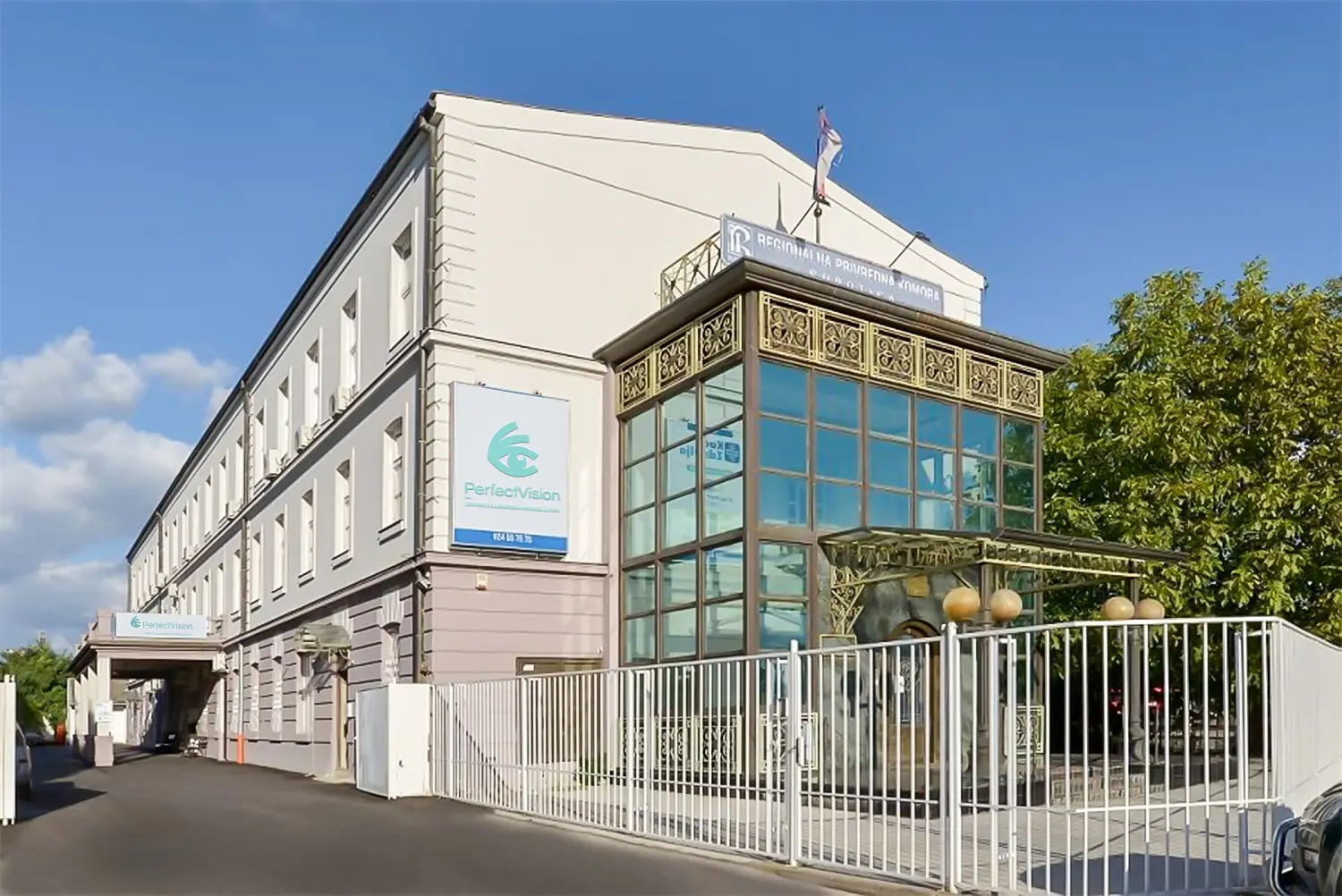


Perfect Vision is a Center for Laser Eye Surgery, located within the Polyclinic House of Health, based in Subotica. Visit us!


We have an ISO certificate according to ISO 9001: 2015, registration number 12 100 59137 TMS for the area of Diagnostic, Conservative and Surgical Ophthalmic Services, issued by the certification body TÜV NORD CERT GmbH.


