Cataract is an ophthalmic problem that occurs when the lens of the eye becomes cloudy and cloudy. The lens is the normally clear part of the eye that focuses light on the retina, allowing clear vision. However, over time, proteins inside the lens can build up and harden, resulting in clouding and loss of visual acuity.
Cataracts usually occur with aging, but can also be caused by other factors, such as injuries, genetics, smoking or long-term exposure to sunlight.
These are some of the main types of cataracts. It is important to emphasize that each person can develop a different type or a combination of several types. The diagnosis and treatment plan are determined with the help of an ophthalmologist, who will take into account all the individual characteristics of the patient.
📞 Call us to schedule an inspection: 024 45 45 000 or 060 55 75 754
By implementing world ophthalmological trends, we were among the first in the country to include two new intraocular lenses in our offer – AcrySof IQ Vivity and AcrySof IQ Vivity toric .
We are sure that you are convinced that we are constantly improving the cataract surgery, which we perform most often, in order to provide you with the best vision, maximum comfort and safety. From the very beginning, we are different from most eye clinics, with a carefully defined strategy of trying to remove the diopter you have with cataract surgery.
For this reason, we do not stop in front of novelties and if we judge them to be safe, we are happy to embrace them and implement them. As you already know, we started the year as pioneers in the country by first installing Tecnis Eyhance toric intraocular lenses , manufactured by Johnson & Johnson, thus completing all lenses from the Eyhance family. We continue to expand our offer and that’s why we present to you new, noteworthy intraocular lenses.
We decided to include the new Vivity lens in our carefully selected offer because of its functionality. By installing it, you will have good vision at a distance, and due to the extended depth of focus, you also get improved intermediate vision, that is, vision at a medium distance, which we often use in everyday activities such as working on a computer, recognizing numbers and symbols on the dashboard in a car, board games (cards and dominoes), recognizing prices when shopping, cooking and other everyday activities that we perform at a distance of between 44 and 60 cm.
AcrySof IQ Vivity intraocular lens corrects farsightedness and nearsightedness, while AcrySof IQ Vivity toric intraocular lens also corrects astigmatism, which is a refractive defect of the eye caused by irregular curvature of the cornea. The different refractive power leads to an elongated image that you can see if you have astigmatism, due to the elliptical shape of the cornea.
alcon vivity intraocular lens

Implantation of intraocular lenses is performed in both eyes, most often 5 to 7 days apart, because this is the best way to express their full potential.
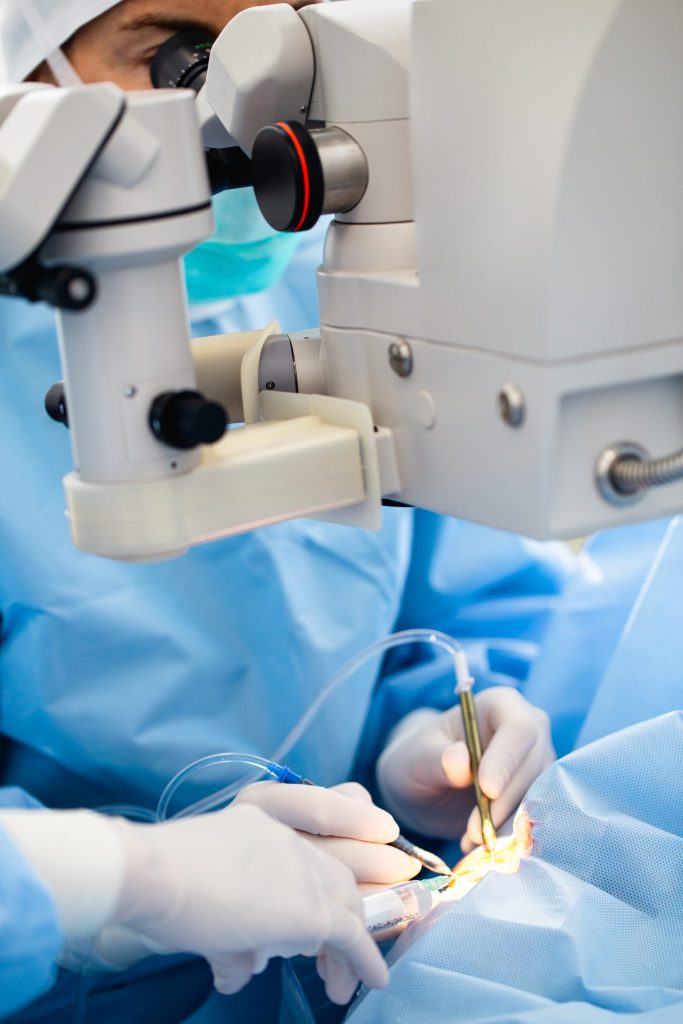
The operation is painless and is performed under local anesthesia. The lens is implanted in the eye through a minimal incision of 2.2 mm, without injections or stitches. This operation is a one-day surgery, which means that the patient goes home after the operation. Recovery is quick and comfortable, and the patient can return to normal life activities after 5-7 days, while heavy physical work and sports activities are not advised in the first 2-3 weeks.
We are waiting for you at Kuća Zdravlja, at the address Senćanski put number 3. Visit our website www.perfectvision.rs, where you can send an inquiry about any doubts you may have, or contact us by phone at 024 45 45 000 or 060 55 75 754 .
We try to keep up with the latest world innovations, guided by the needs brought by today’s fast lifestyle.
We strive to constantly improve cataract surgery , which is most often performed in our eye center, in order to provide patients with maximum comfort, speed, safety and efficiency. Cataract, or gray cataract, is surgically removed and a new, clear intraocular lens is implanted in its place. From the very beginning, we differ from most eye clinics in that, in addition to removing cataracts, we also try to remove the diopter that patients have.
One very common diopter that patients have is astigmatism , a refractive error of the eye, where the patient’s cornea is irregularly curved. The different refractive power results in an elongated image that the patient sees, which occurs due to the elliptical, rather than circular, shape of the cornea. Astigmatism is permanently corrected by installing a toric lens.
We start the year with a small victory for us, as well as for our patients. At the end of January of this year, we were the first in the country to install intraocular Tecnis Eyhance toric lenses , manufactured by Johnson & Johnson, thus completing all lenses from the Eyhance family.
The technology used by this pharmaceutical company contributes to the permanent elimination of cataracts, distance diopters, and at the same time the correction of astigmatism after the installation of this lens. But in addition, what sets it apart from our existing types of monofocal lenses that we offer, is a clear vision at the middle distance , which is considered a distance of 60 to 80 cm.
By implanting the Eyhance toric lens, the patient gets good vision without prescription glasses at long and medium distance in one painless and quick operation. It is important because it facilitates daily functioning when working at the computer, provides improved vision when looking at the dashboard in the car, when playing board games, reading prices in the store, applying makeup, and the like. They provide clear vision even under poor lighting as well as when driving at night.
You can view the impressions of the patients who were the first to have this lens implanted with us on our website in the “Experiences” section.

07/03/2014. In 2018, the eye center “Perfect Vision” was visited by the representative of the AMO company for the region of Eastern Europe, Mr. Jacek Czajka.In order to become more familiar with our work and the innovations we apply in practice, Mr. Czajka, after a detailed tour of the clinic, exchanged valuable experiences with Dr. Branka Ivošević. On this occasion, Mr. Czajka presented new technologies and products from AMO’s offer, some of which have already found a place in our work, showing exceptional results in practice. A topic of particular importance is the presentation of the revolutionary lenses AMO Symfony for extended view range, the application of which has already given excellent results to patients.
Representative of the AMO company for Serbia Goran Ratković, Dr. Branka Ivošević and representative of the AMO company for Eastern Europe Jacek Czajka
Company AMO (Abbott Medical Optics) is our long-term associate. It is an American company that represents one of the leaders in the world market in the field of ophthalmology. They specialize in products for cataract surgery, refractive surgery, artificial tears and solutions for contact lens care. They operate successfully in 24 countries and market their products in around 60 countries around the world.
AMO representative for Serbia Goran Ratković, Dr. Dragana Stamenković, Dr. Ranko Gvozdenović and AMO representative for Eastern Europe Jacek Czajka
The purpose of this visit is improving our cooperation with the AMO company and opening opportunities for the application of new, innovative technologies and products in our work. In this way, we will be able to provide our patients with a better, improved service that follows the latest trends and achievements of world ophthalmology.

This text is intended to introduce our patients to a new type of service provided by our clinic, which is the implantation of intraocular lenses that correct astigmatism.
– Astigmatism is a fracture anomaly of the eye that is caused by an irregular curvature of the cornea, so that its curvature is different in different meridians of the eye. As a result, blurred vision occurs.
– Intraocular lenses are artificial lenses that are surgically implanted in the eye, most often during cataract surgery (Figure 1 – Artificial Lens, Figure 2 – position of the lens after implantation in the eye). Lenses become an integral part of the eye, they are not removed, the patient does not feel them and do not have an expiration date.
–Cataract is a clouding of the lens of the eye, a structure of the eye located behind the iris (iris), which causes blurred vision that in most cases cannot be corrected with glasses. The only way to solve the problem of cataracts is surgical removal of cataracts and implantation of artificial lenses in the eye – the so-called intraocular lenses.
In people who have astigmatism and cataracts, it is possible to implant an artificial lens in the eye to get rid of the problem of cataracts and the problem of astigmatism, which is primarily related to corneal anomaly. These lenses are called toric intraocular lenses. If patients with astigmatism implant standard lenses, they will usually receive distance and near-vision glasses, and if they are implanted with toric intraocular lenses, there is a high probability that they will be independent of wearing distance glasses, and will wear only reading glasses.
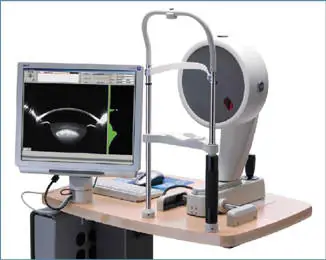
Patients who have this problem undergo a very precise and extensive examination before surgery. Our clinic has diagnostic equipment that rivals the best clinics in Western countries, which is of great importance in the implantation of this type of lens. We have machines that represent the gold standard in this type of surgery in the world (Figure 3 – Penatacam HR – German-made – the leading corneal topograph currently in the world, Figure 4 – LenstarLS 900 – the best optical biometer in the world, the gold standard in calculating the corneal curvature index).
Perfect Vision is an Eye Laser Surgery Center located within the Kuća zdravlja Polyclinic, headquartered in Subotica.
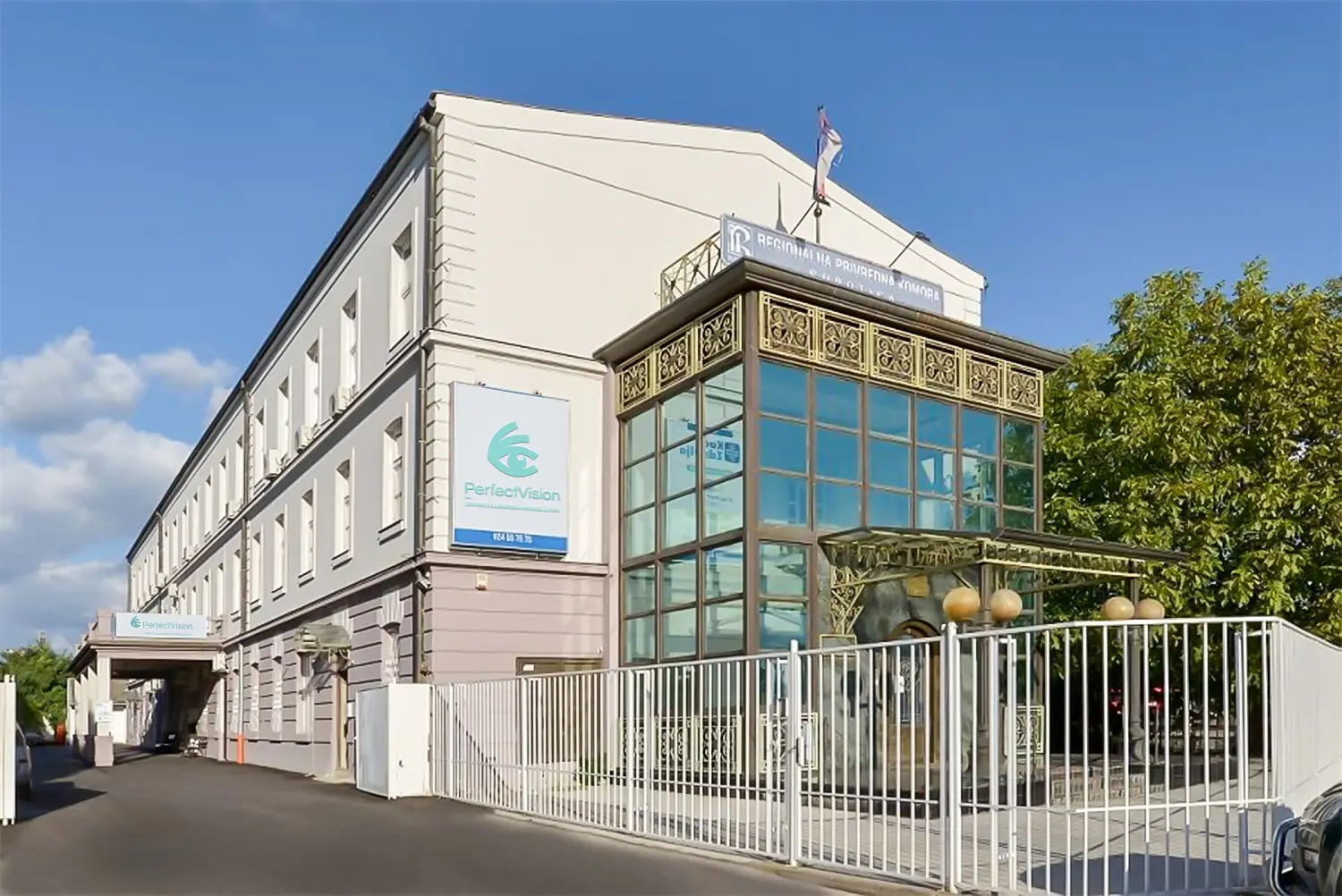


Perfect Vision is a Center for Laser Eye Surgery, located within the Polyclinic House of Health, based in Subotica. Visit us!


We have an ISO certificate according to ISO 9001: 2015, registration number 12 100 59137 TMS for the area of Diagnostic, Conservative and Surgical Ophthalmic Services, issued by the certification body TÜV NORD CERT GmbH.