Meibomian gland expression – the key to the health of your tear film and clear vision
What are Meibomian glands? Meibomian glands are small glands located in the eyelids that produce the lipid (fatty) component of…

For proper vision development in a child, the basic prerequisite is that all eye structures are healthy: transparent cornea and lens, healthy fundus and optic nerve. The process of visual development does not end with the birth of a child, but continues most intensively between the third month and the third year of life and ends in the seventh year. ophthalmology, if it is detected late, i.e. after the end of vision development, which usually happens at the age of 7-8.
The first eye examination is performed by a pediatric neonatologist after birth. If a pediatrician or parent notices a “white pupil” which may be a sign of a rare tumor of the fundus – retinoblastoma or congenital cataract, urgent surgical intervention is required.
The following eye examination is performed by a pediatrician as part of a routine systematic examination in the period from the sixth to the twelfth month of life. If a parent or pediatrician notices the absence of following the mother’s face, light, brightly colored toys, squinting, frequent squinting and rubbing of the eyes, it is necessary to immediately take the child to an ophthalmological examination. acuity, because the child is then old enough to give a reliable subjective answer, and at the same time young enough for congenital low vision to be treated in a timely manner.
If one or both parents wear glasses, i.e. have nearsightedness, farsightedness or astigmatism, it is necessary to bring the child to the age of three for an eye examination and then continue with regular semi-annual or annual visual acuity checks in accordance with the recommendation ophthalmologist. In the event that any refractive error is detected during the examination, the child is prescribed glasses, and if necessary, occlusion (closing the eye with a bandage), in order to stimulate the proper development of vision.
The next examination is performed when the child starts school. It must not be the first eye examination because large diopters, difference in diopters, farsightedness or other disorders that lead to low vision, cannot be adequately treated since the process of developing the child’s visual function is already in its final phase.
Perfect Vision is an Eye Laser Surgery Center located within the Kuća zdravlja Polyclinic, headquartered in Subotica.
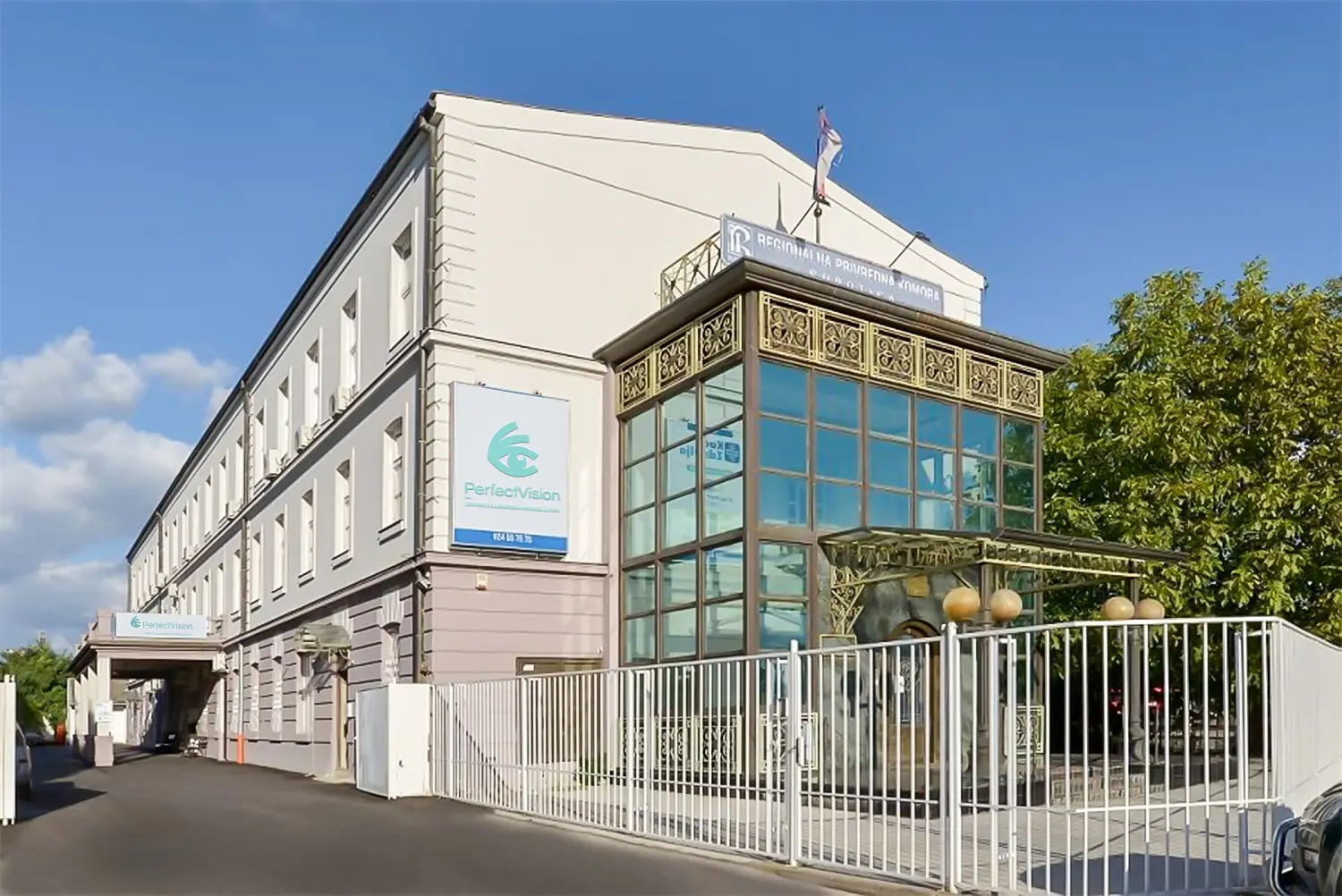


Perfect Vision is a Center for Laser Eye Surgery, located within the Polyclinic House of Health, based in Subotica. Visit us!


We have an ISO certificate according to ISO 9001: 2015, registration number 12 100 59137 TMS for the area of Diagnostic, Conservative and Surgical Ophthalmic Services, issued by the certification body TÜV NORD CERT GmbH.