Meibomian gland expression – the key to the health of your tear film and clear vision
What are Meibomian glands? Meibomian glands are small glands located in the eyelids that produce the lipid (fatty) component of…

Concept and division
Contact lenses are today made of different materials and represent one of the possible ways of correcting diopters. They are placed directly on the eyes and become an integral part of the refractive apparatus of the eye. The very name contact lenses is wrong, swimming lenses would be more appropriate, because they are immersed in tears. There are different types of contact lenses. The best-known classification of contact lenses is the one according to the type of material from which they are made:
• Hard gas impermeable
• Hard gas permeable
• Soft
• Hybrid
Wearing complications
There are numerous potential complications of wearing contact lenses that can occur as an inevitability of long-term wear, poor biocompatibility (submission of the material from which the lens is made), or as a consequence of non-compliance with the wearing and maintenance regime.
Complications when wearing soft of contact lenses are more common than with hard lenses. Soft lenses, depending on their composition, have a different percentage of water and pass oxygen to different extents. They are more difficult to maintain than hard lenses. If they are worn for a long time, especially continuously (especially at night and during the day), they can cause complications on the cornea, inflammation of the conjunctiva (superficial lining of the eye), as well as other less common eye complications.
The most common complication is the formation of vascularization of the cornea, when small blood vessels grow from the periphery of the cornea, which as a rule has no blood. courts. This is a consequence of the lack of oxygen, which is extremely important in the nutrition of the cornea. There may also be a change in the sense of decrease in transparency of the cornea, which may be a consequence of fluid accumulation (swelling) or smaller and larger infiltrates, which may be just a few to diffuse involvement of the entire cornea.
More serious complications include corneal inflammation. If the cause of corneal inflammation is pseudomonas or acanthameba bacteria, then the consequences for the eye can be very serious and accompanied by even very severe visual impairment.
One of the possible changes is the so-called Giant papillary conjunctivitis, where the conjunctiva of the eye becomes red and uneven, and has a “cobblestone” appearance, in contrast to the healthy conjunctiva, which is smooth, shiny, and transparent. Sometimes, as a result of irritation, slight swelling and lowering of the upper eyelid (ptosis) can occur.
There are numerous other complications caused by allergic reactions and intolerance of the material itself from which the lens is made or liquids for storing and cleaning the lenses, as well as accumulation of various deposits on lens. Physical damage to the lens is also possible, which can cause various damages to the cornea and sclera.
Long-term wearing of contact lenses impairs the quality of the tear film, which has the role of refracting light, nourishing and cleaning the surface of the eye, which can result in vision changes and the development of dry eye syndrome. Symptoms of dry eye are most often redness, foreign body sensation, increased secretion, occasional visual disturbances, especially when working, especially working on a computer, which can all together cause contact lens intolerance. timely treatment, which will prevent possible more serious complications.
The opinion of many ophthalmologists is that contact lenses compromise the tear film, as well as the nutrition of the cornea, which disrupts and changes its structure. This puts the greater part of the front segment of the eye in non-physiological functioning conditions.
Taking into account numerous extensive professional studies, which pointed to the previously described and possible complications, as well as various unwanted effects related to hygiene maintenance and lens wearing regime, we should take into account the alternative ways of correcting diopters that today’s medicine allows us, such as laser removal of dioptres and installation of intraocular lenses of various designs, which represents a permanent, efficient and modern solution, which modern technology offers today.
Perfect Vision is an Eye Laser Surgery Center located within the Kuća zdravlja Polyclinic, headquartered in Subotica.
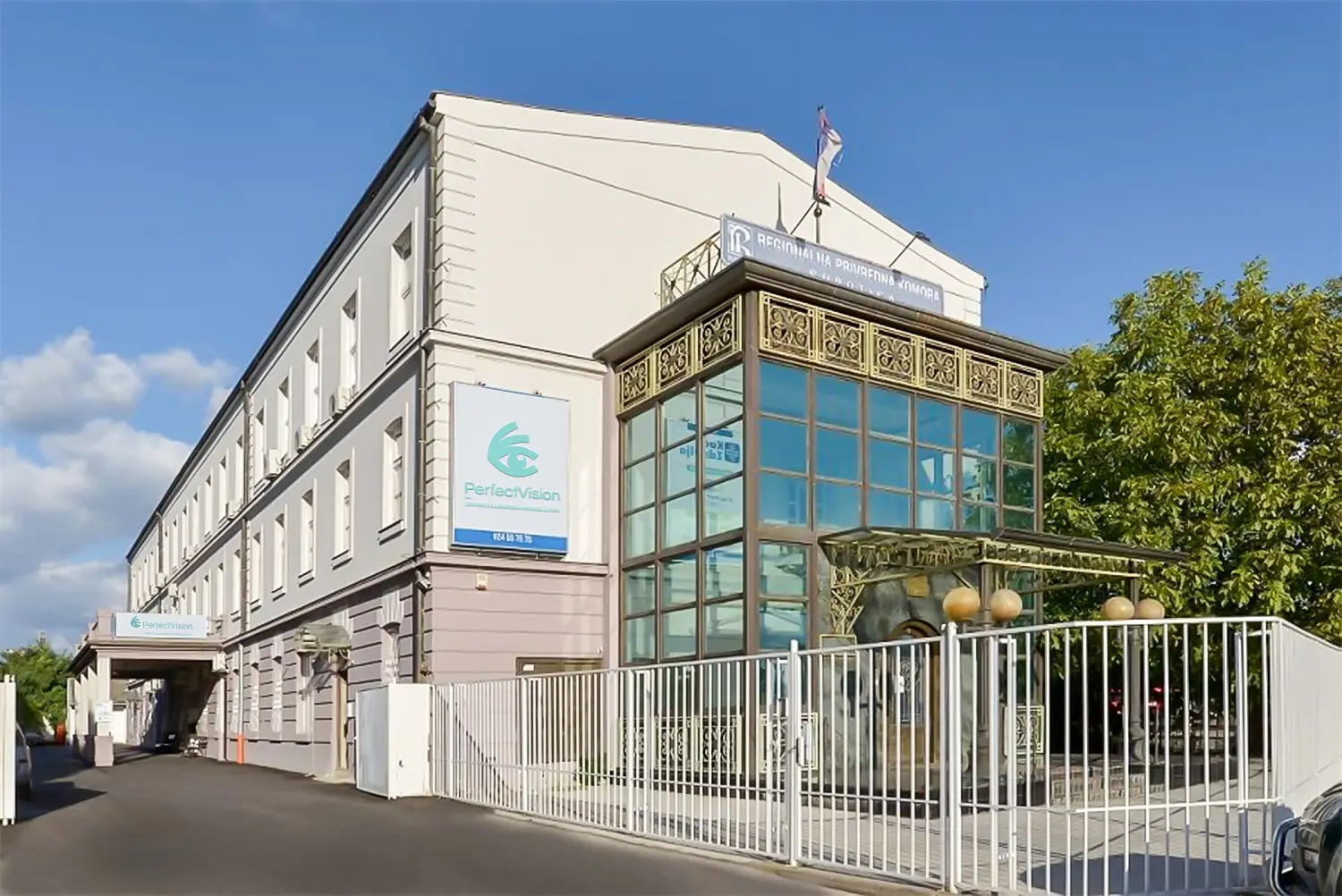


Perfect Vision is a Center for Laser Eye Surgery, located within the Polyclinic House of Health, based in Subotica. Visit us!


We have an ISO certificate according to ISO 9001: 2015, registration number 12 100 59137 TMS for the area of Diagnostic, Conservative and Surgical Ophthalmic Services, issued by the certification body TÜV NORD CERT GmbH.