Meibomian gland expression – the key to the health of your tear film and clear vision
What are Meibomian glands? Meibomian glands are small glands located in the eyelids that produce the lipid (fatty) component of…
November 20 is celebrated worldwide as World Children’s Day, as part of the celebration of the anniversary of the signing of the UN Convention on the Rights of the Child in 1989, which officially established the specific rights of the child.
https://perfectvision.rs/2013/10/besplatni-oftalmoloski-pregledi-u-vrticima/<!–
/wp:paragraph –>[nggallery id=27]

The right to a healthy life and proper development is one of the fundamental rights of every child. A particularly important segment of children’s health care is monitoring and ensuring the proper development of vision, as one of the elementary prerequisites for a happy life of a child.
From the moment a child is born, it is necessary for a child’s vision to be monitored by a pediatrician and a parent. If any disturbances are noticed, such as: the absence of monitoring of the mother’s face, light, brightly colored toys, looseness, frequent squinting, rubbing of the eyes, it is necessary to immediately bring the child for an ophthalmological examination.
If achild’s visual abnormalities are not noticed in time, amblyopia develops. It is a permanently and irreversibly reduced visual acuity, which occurs in early childhood, in the period when the development of the eye, brain centers for vision and nerve pathways that transmit information from the eye to the brain occurs. If in early childhood the correct relationship to these three levels is not established, amblyopia occurs and there is no possibility of its later treatment, even with the help of available methods of modern ophthalmology.
Spotting signs of eye disease is most effective between the ages of 3 and 5. Bearing in mind that this is the best age for visual acuity testing, ophthalmological examinations in the 4th year are prescribed by the “Rulebook on the Scope and Content of Health Care” as a mandatory and necessary measure of monitoring and establishing the proper development of the child’s vision. If any disturbances in the development of vision are observed at this age, by placing the child under the supervision of an ophthalmologist and applying appropriate treatment methods, the child is enabled to develop vision properly and prevents the occurrence of amblyopia.
Ophthalmological examination should be performed before the child starts school. It is important to emphasize that this should not be the first examination, because in the 7th or 8th year of life, the development of vision ends and if only then are discovered any causes that lead to amblyopia (the so-called refractive errors such as farsightedness, nearsightedness and astigmatism and squint), they cannot be adequately treated.
The key to success in the timely treatment of improper vision development lies in prevention. Of great importance is careful observation of children by parents, timely departure and conversation with an ophthalmologist and mandatory ophthalmological examination in the first, fourth and sixth year of the child’s life.
Related news:
https://perfectvision.rs/2013/10/besplatni-oftalmoloski-pregledi-u-vrticima/<!–
/wp:paragraph –>[nggallery id=27]
Perfect Vision is an Eye Laser Surgery Center located within the Kuća zdravlja Polyclinic, headquartered in Subotica.
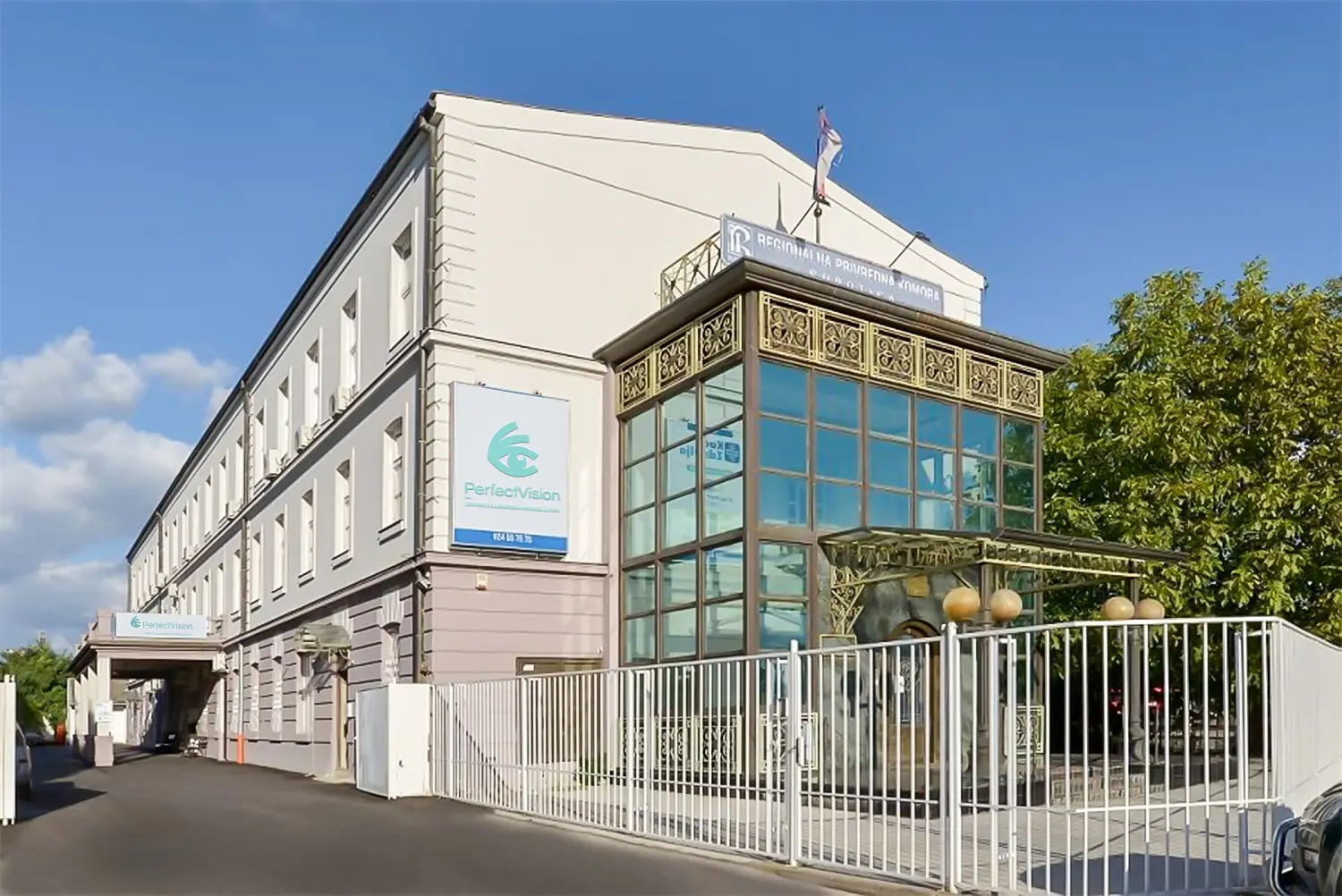


Perfect Vision is a Center for Laser Eye Surgery, located within the Polyclinic House of Health, based in Subotica. Visit us!


We have an ISO certificate according to ISO 9001: 2015, registration number 12 100 59137 TMS for the area of Diagnostic, Conservative and Surgical Ophthalmic Services, issued by the certification body TÜV NORD CERT GmbH.