Meibomian gland expression – the key to the health of your tear film and clear vision
What are Meibomian glands? Meibomian glands are small glands located in the eyelids that produce the lipid (fatty) component of…
Causes and occurrence of the disease: Patients with disorders due to excessive tearing of the eyes often come to the ophthalmology clinic. This condition is called epiphora. Tears are produced in the main and accessory lacrimal glands, after which they are distributed over the entire surface of the eye and go in the direction of the nose where they are drawn into the tear ducts and lacrimal sac through which they go to the nose. Thus, it can be said that increased tearing of the eye occurs if too many tears are produced that cannot flow through the ducts quickly enough, or with a normal amount of tears if the ducts are clogged. The increased production of tears is influenced by emotions (crying), eye irritation (smoke, smog, nicotine), foreign bodies (dust), inflammation of the conjunctiva, cornea. Difficult or impossible swelling of tears is caused by narrowing of the tear ducts or tear sac due to inflammation and injury, and in newborns also due to the existence of a membrane in the drainage tear ducts that normally disappears on its own. Symptoms: An increased amount of tears flow over the edge of the eyelid down the face instead of towards the nose. As this stimulates us to constantly wipe the eye and face, redness of the eye can occur, and in very pronounced and long-term cases, the edge of the eyelid changes its position, which makes the conjunctiva more exposed to inflammation. Treatment: If the cause of the tearing is eye irritation, then the cause should be eliminated, either by stopping the stay in a polluted environment, or by treating the diseases of the conjunctiva and cornea that cause these disorders. Rinsing the tear ducts is useful in some cases, but surgery is usually required when the passage of tears In the neonatal age, the membrane in the tubules is attempted to break through by firmly massaging the inner corner of the eye in the direction of the nose. If this technique does not give results, then a minor surgical procedure is performed, which is performed under general anesthesia due to the need for the child to be completely still. During the operation, a special thin probe is inserted into the canals to reach the membrane and pierce it. The operation has excellent results, and the tearing disappears almost instantly. Causes and occurrence of the disease: Patients with disorders due to excessive tearing of the eyes often come to the ophthalmology clinic. This condition is called epiphora. Tears are produced in the main and accessory lacrimal glands, after which they are distributed over the entire surface of the eye and go in the direction of the nose where they are drawn into the tear ducts and lacrimal sac through which they go to the nose. Thus, it can be said that increased tearing of the eye occurs if too many tears are produced that cannot flow through the ducts quickly enough, or with a normal amount of tears if the ducts are clogged. The increased production of tears is influenced by emotions (crying), eye irritation (smoke, smog, nicotine), foreign bodies (dust), inflammation of the conjunctiva, cornea. Difficult or impossible swelling of tears is caused by narrowing of the tear ducts or tear sac due to inflammation and injury, and in newborns also due to the existence of a membrane in the drainage tear ducts that normally disappears on its own. Symptoms: An increased amount of tears flow over the edge of the eyelid down the face instead of towards the nose. As this stimulates us to constantly wipe the eye and face, redness of the eye can occur, and in very pronounced and long-term cases, the edge of the eyelid changes its position, which makes the conjunctiva more exposed to inflammation. Treatment: If the cause of the tearing is eye irritation, then the cause should be eliminated, either by stopping the stay in a polluted environment, or by treating the diseases of the conjunctiva and cornea that cause these disorders. Rinsing the tear ducts is useful in some cases, but surgery is usually required when the passage of tears In the neonatal age, the membrane in the tubules is attempted to break through by firmly massaging the inner corner of the eye in the direction of the nose. If this technique does not give results, then a minor surgical procedure is performed, which is performed under general anesthesia due to the need for the child to be completely still. During the operation, a special thin probe is inserted into the canals to reach the membrane and pierce it. The operation has excellent results, and the tearing disappears almost instantly.
Perfect Vision is an Eye Laser Surgery Center located within the Kuća zdravlja Polyclinic, headquartered in Subotica.
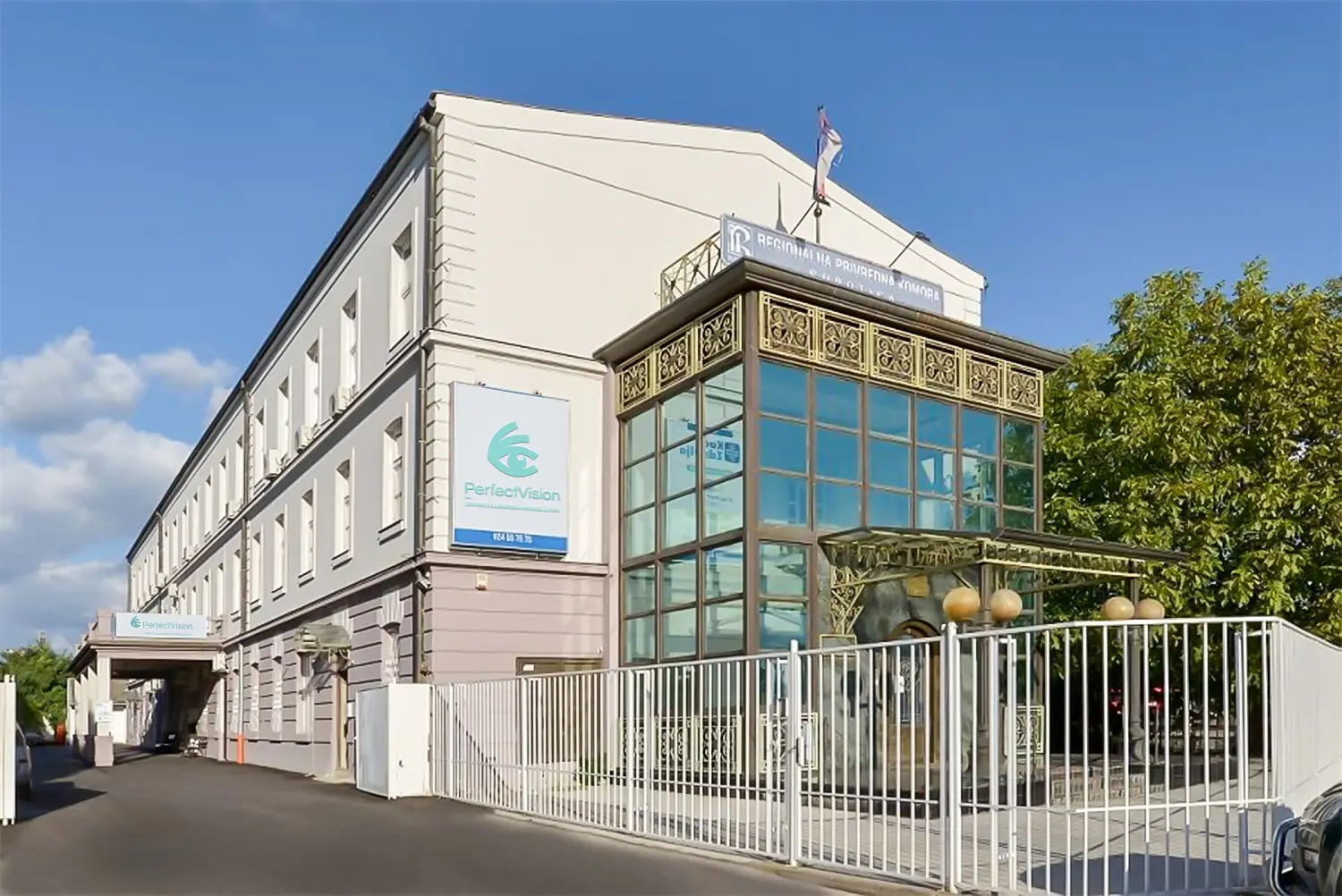


Perfect Vision is a Center for Laser Eye Surgery, located within the Polyclinic House of Health, based in Subotica. Visit us!


We have an ISO certificate according to ISO 9001: 2015, registration number 12 100 59137 TMS for the area of Diagnostic, Conservative and Surgical Ophthalmic Services, issued by the certification body TÜV NORD CERT GmbH.