Modern ophthalmology has various ways to improve and improve patients’ eyesight. There is a wide range of reasons why patients come to their ophthalmologist with the intention of improving their quality of life, in which vision plays a very important role.
The ophthalmologist encounters:
Young people who, due to the type of diopter they have, can no longer satisfy their life activities by wearing glasses or contact lenses, either for aesthetic reasons, the type of profession they are engaged in, or from the medical point of view it is indicated to solve the problem refractive errors by means of laser methods or by fitting of special intraocular lenses.
Middle-aged people who need a permanent solution to good near and distance vision for the type of work they do, and have contacted an ophthalmologist because of premature pathological cataracts (clouding of the lens of the eye), either because it is impractical for them to have more than one pair of glasses due to the type of work they do, or because they cannot get used to multifocal glasses, or have high values of plus or minus diopters that they are not satisfied with the correction of glasses or contact lenses.
An
elderly population of people who develop the so-called senile cataract, a clouding of our natural lens that can be expressed to such an extent that people see blurrily, or have an increased sensitivity to light, or that the blurring is to such an extent that they cannot move safely through space, or in the worst cases, visual acuity is reduced to the sense of light in the room.
The ophthalmologist has the task of looking at all these facts and reviewing the medical records in detail to find the best solution for the patient.
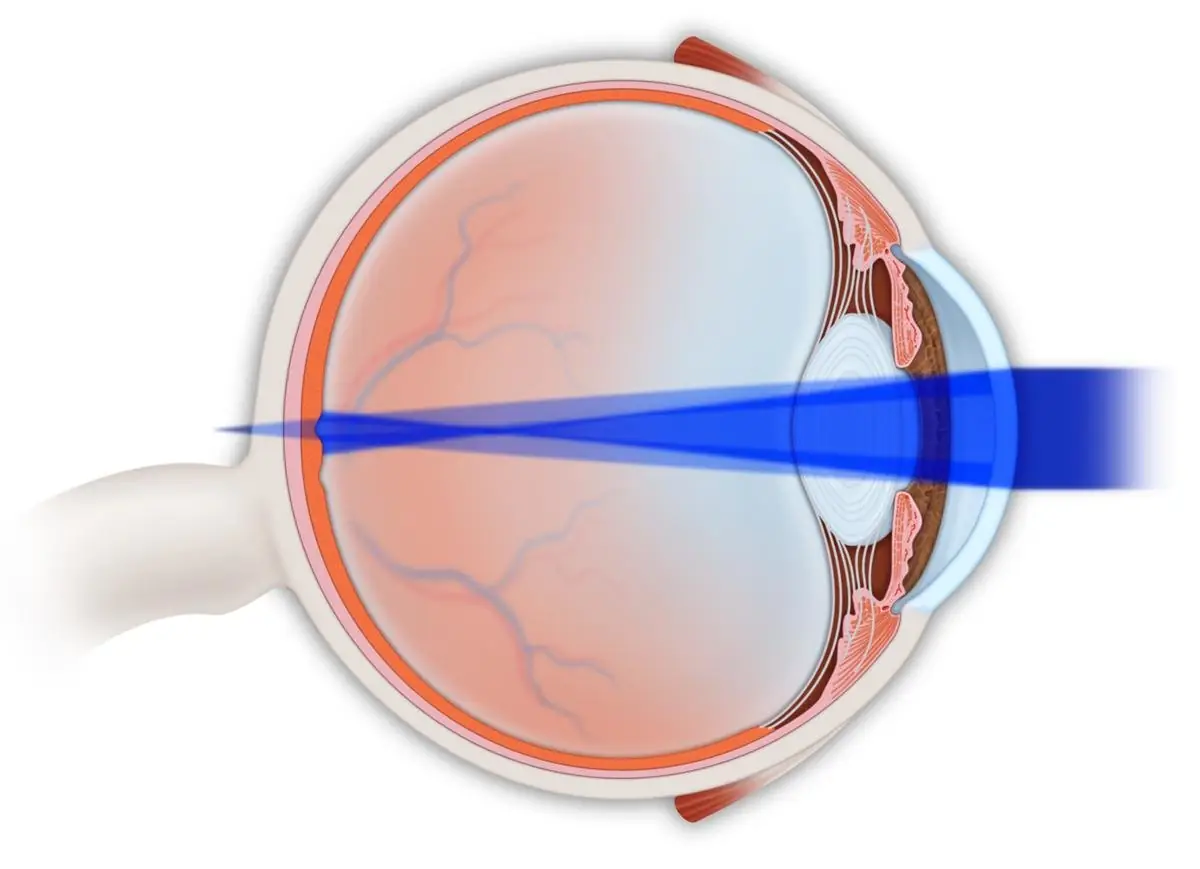
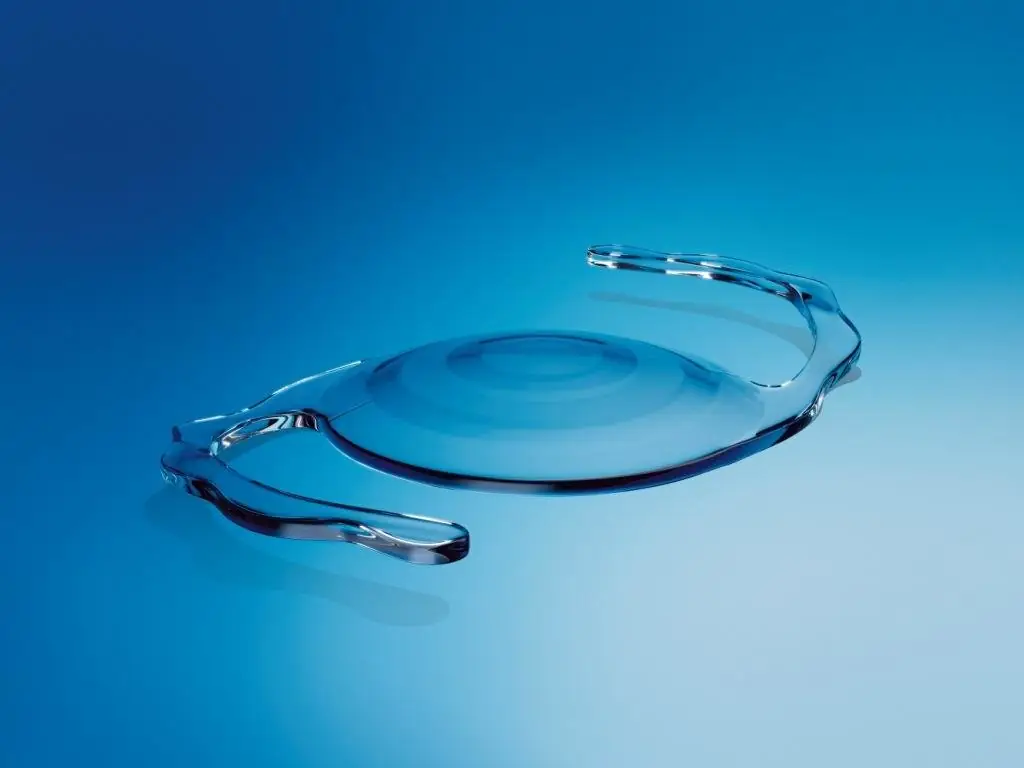
The most common way to solve these problems is the surgical implantation of intraocular lenses, specially designed artificial lenses that permanently solve the problem of optical correction by implanting them in the anterior chamber of the eye, the posterior chamber of the eye, or in place of the natural lens.
The following lenses are installed according to the type of medical indication:
Spherical or asphericalmonofocal lenses, correcting a refractive error related to a classic minus or plus diopter, but not correcting astigmatism (wrong curvature of the cornea) or presbyopia (the need to wear glasses for close work). It should be noted that aspherical lenses are of a newer design and that the way they are built has improved certain disadvantages of spherical lenses, so that they have proven to be better at correcting spherical aberrations and contrast sensitivity, certain visual acuity characteristics that affect the quality of vision. As a result, aspherical lenses have gained primacy in clinics throughout Western Europe.
Aspherical lenses with a yellow filter – have the same characteristics as classic aspherical lenses, but the surface of the lens is designed to prevent the refraction of a certain spectrum of sunlight that in certain pathological aspects can adversely affect the yellow spot (an important center for vision at the fundus of the eye).
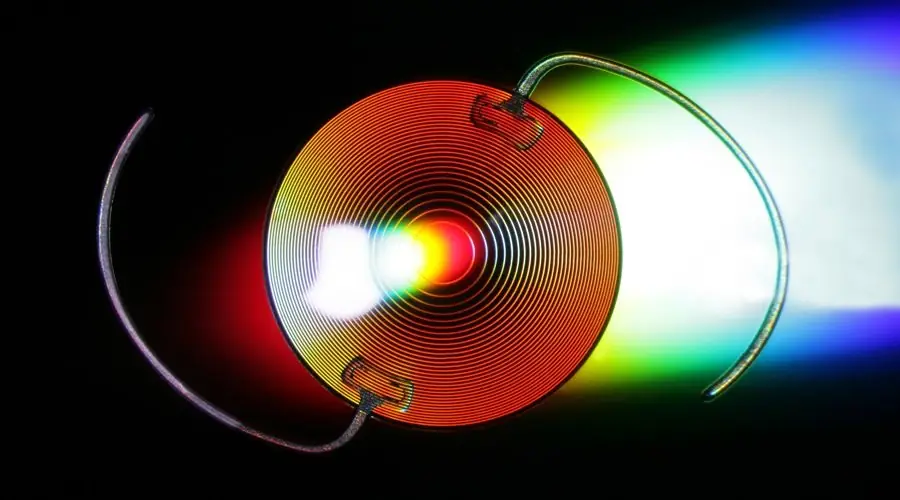
Multifocal lenses – lenses whose implantation achieves vision correction both near and far. It is a special type of lens that has several concentric rings in their structure that have different refractive power and thus allow the patient to focus on a wider range of distances. They are suitable for people who are professionally active, who have a diopter for distance and have the need to wear glasses for close and computer work, but they are not recommended for professional drivers, i.e. people who, due to the nature of their work, often drive at night.
Modern ophthalmology has various ways to improve and improve patients’ eyesight. There is a wide range of reasons why patients come to their ophthalmologist with the intention of improving their quality of life, in which vision plays a very important role.
The ophthalmologist encounters:
Young people who, due to the type of diopter they have, can no longer satisfy their life activities by wearing glasses or contact lenses, either for aesthetic reasons, the type of profession they are engaged in, or from the medical point of view it is indicated to solve the problem refractive errors by means of laser methods or by fitting of special intraocular lenses.
Middle-aged people who need a permanent solution to good near and distance vision for the type of work they do, and have contacted an ophthalmologist because of premature pathological cataracts (clouding of the lens of the eye), either because it is impractical for them to have more than one pair of glasses due to the type of work they do, or because they cannot get used to multifocal glasses, or have high values of plus or minus diopters that they are not satisfied with the correction of glasses or contact lenses.
An
elderly population of people who develop the so-called senile cataract, a clouding of our natural lens that can be expressed to such an extent that people see blurrily, or have an increased sensitivity to light, or that the blurring is to such an extent that they cannot move safely through space, or in the worst cases, visual acuity is reduced to the sense of light in the room.
The ophthalmologist has the task of looking at all these facts and reviewing the medical records in detail to find the best solution for the patient.
The most common way to solve these problems is the surgical implantation of intraocular lenses, specially designed artificial lenses that permanently solve the problem of optical correction by implanting them in the anterior chamber of the eye, the posterior chamber of the eye, or in place of the natural lens.
The following lenses are installed according to the type of medical indication:
Spherical or asphericalmonofocal lenses, correcting a refractive error related to a classic minus or plus diopter, but not correcting astigmatism (wrong curvature of the cornea) or presbyopia (the need to wear glasses for close work). It should be noted that aspherical lenses are of a newer design and that the way they are built has improved certain disadvantages of spherical lenses, so that they have proven to be better at correcting spherical aberrations and contrast sensitivity, certain visual acuity characteristics that affect the quality of vision. As a result, aspherical lenses have gained primacy in clinics throughout Western Europe.
Aspherical lenses with a yellow filter – have the same characteristics as classic aspherical lenses, but the surface of the lens is designed to prevent the refraction of a certain spectrum of sunlight that in certain pathological aspects can adversely affect the yellow spot (an important center for vision at the fundus of the eye).
Multifocal lenses – lenses whose implantation achieves vision correction both near and far. It is a special type of lens that has several concentric rings in their structure that have different refractive power and thus allow the patient to focus on a wider range of distances. They are suitable for people who are professionally active, who have a diopter for distance and have the need to wear glasses for close and computer work, but they are not recommended for professional drivers, i.e. people who, due to the nature of their work, often drive at night.
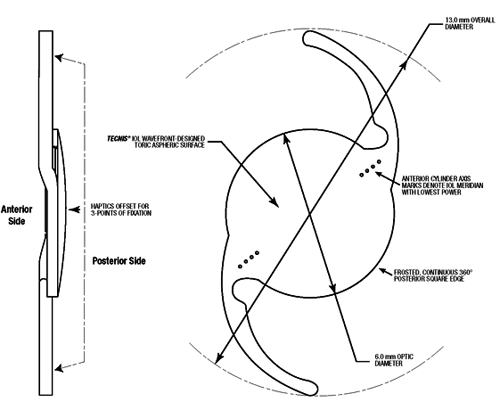
Multifocal toric lenses – Lenses with the common characteristics of multifocal and toric lenses.
Iris Fixing Lenses – Specially designed lenses that are surgically implanted in the anterior chamber of the eye, with special hooks, are painlessly attached, i.e. fixed to the iris (iris). They achieve the correction of myopia (minus diopters) in younger people who still have accommodation, and due to the morphological characteristics of the cornea, they are not candidates for any of the procedures of laser vision correction.
Having modern diagnostic equipment, a team of experienced surgeons, following modern approaches and trends, our clinic can boast of offering all the mentioned intraocular lenses, all with the intention of improving the quality of life of patients who contact us with their problem.
Find answers to the most common questions about laser vision correction, cataracts and lens implantation. Everything you need to know before deciding on a procedure.
No, the procedure is completely painless. It takes only a few minutes, and as early as the next day you can function normally without glasses or lenses.
If you notice that your vision is blurry, colors are fading and you struggle to drive at night, these are clear warning signs. Surgery restores clear vision and once cataracts are diagnosed, it should not be postponed.
The biggest advantage is that you forget about glasses – both for near and far. This means you can read a book, use your phone and drive without additional visual aids.
You absolutely do! Toric lenses are specifically designed to correct astigmatism and provide clear vision.
These are artificial lenses that are placed inside the eye, while your natural lens remains untouched. They are an excellent option for younger people with high diopters who are not candidates for laser vision correction.