Meibomian gland expression – the key to the health of your tear film and clear vision
What are Meibomian glands? Meibomian glands are small glands located in the eyelids that produce the lipid (fatty) component of…
The World Health Organization has dedicated this year’s World Health Day, which is traditionally celebrated on April 7, to one of the most common diseases of modern times – diabetes . The number of people suffering from this disease is constantly increasing, and black statistics predict that by 2030 there will be as many as 366 million people suffering from it.

Diabetes is an insidious and very serious disease that is characterized by mild symptoms, and therefore often a large number of people with diabetes do not even know that they have the disease, since this disease can go unnoticed for years, and it is discovered by chance and unfortunately when complications are already present.
Diabetes gradually leads to damage of all blood vessels in the body, including the blood vessels of the eye fundus. There are practically no diabetics who, after a few years, do not develop changes in the blood vessels of the fundus (they become permeable and leak fluid or blood), which causes the patient to see less and less. This condition is called diabetic retinopathy .
The only adequate and globally recognized method of treating diabetic retinopathy is laser photocoagulation of the fundus . This ten-minute outpatient procedure “seals” bleeding blood vessels, which slows or at best stops further vision loss. In order for this laser treatment to have an effect, it is necessary to carry it out on time.
In some patients with long-term diabetes, the disease progresses to an advanced stage – proliferative diabetic retinopathy , when newly formed blood vessels appear in the eye, which are very dangerous because they have a thin wall that is permeable to liquid, which often leads to blood spilling into the eye. Patients notice a sudden decrease in vision, which they explain as a moving curtain or a spot that swims in the eye. The appearance of such symptoms requires an immediate visit to an eye doctor. Depending on how thick the bleeding is, the disease is treated with laser photocoagulation, injections into the eye (anti-VEGF therapy) or complicated surgery – vitrectomy.
Perfect Vision is an Eye Laser Surgery Center located within the Kuća zdravlja Polyclinic, headquartered in Subotica.
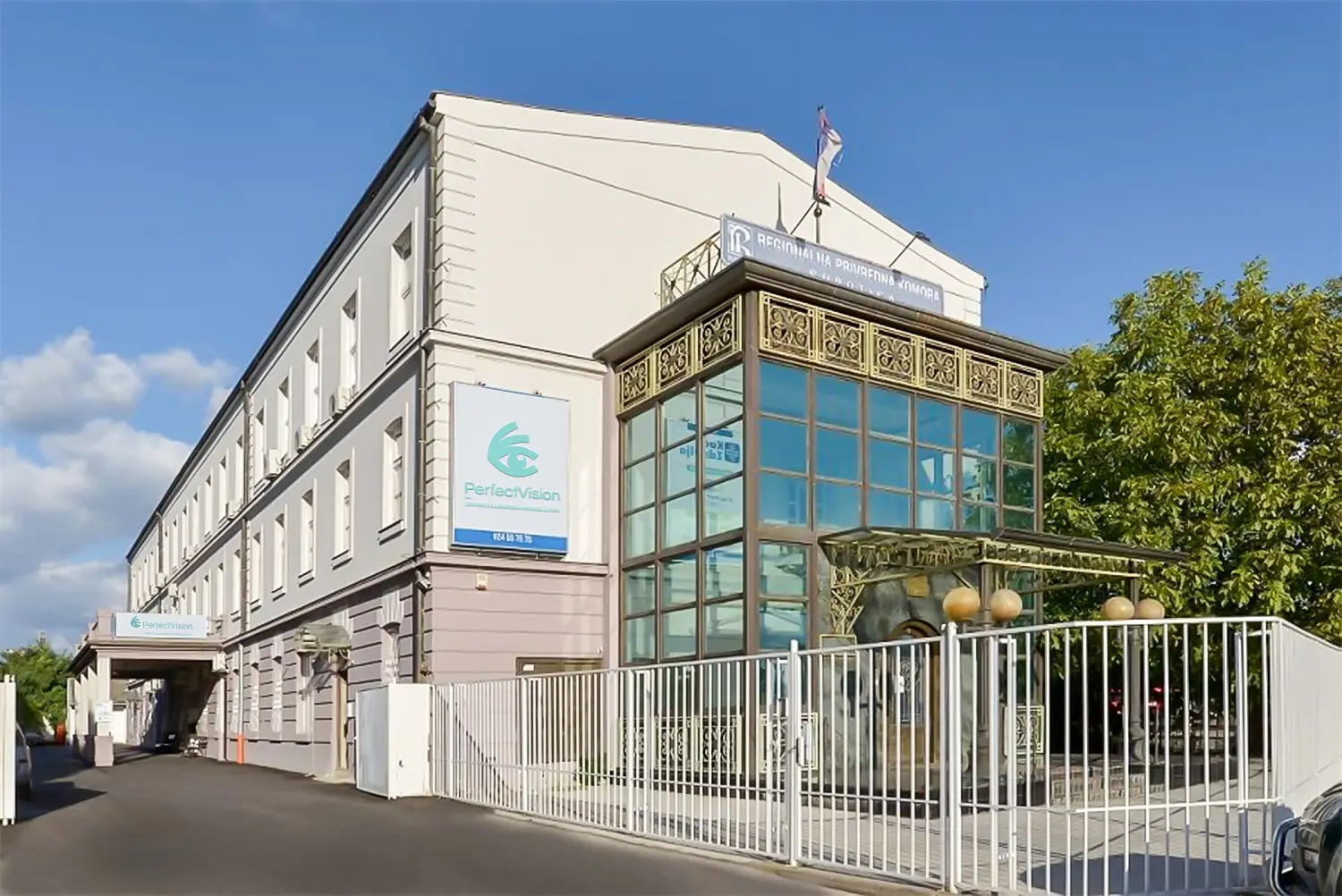


Perfect Vision is a Center for Laser Eye Surgery, located within the Polyclinic House of Health, based in Subotica. Visit us!


We have an ISO certificate according to ISO 9001: 2015, registration number 12 100 59137 TMS for the area of Diagnostic, Conservative and Surgical Ophthalmic Services, issued by the certification body TÜV NORD CERT GmbH.