Vitra Monospot ophthalmic photocoagulator
Quantel Medical is a French company that has traditionally been a leader in the development of laser equipment for medical, as well as industrial and scientific purposes. The company offers innovative therapeutic solutions for specific ophthalmic conditions using laser technology. Since its founding in the early nineteen-nineties, Quantel Medical has been producing a wide range of high quality ultrasound and laser devices. This equipment is of great importance for the diagnosis and prevention of emergency conditions such as retinal detachment from the underlying retinal pigment epithelium. “Perfect Vision” in its extensive range of high quality ophthalmic therapeutic equipment also has the Vitra Monospot ophthalmic photocoagulator manufactured by this company.
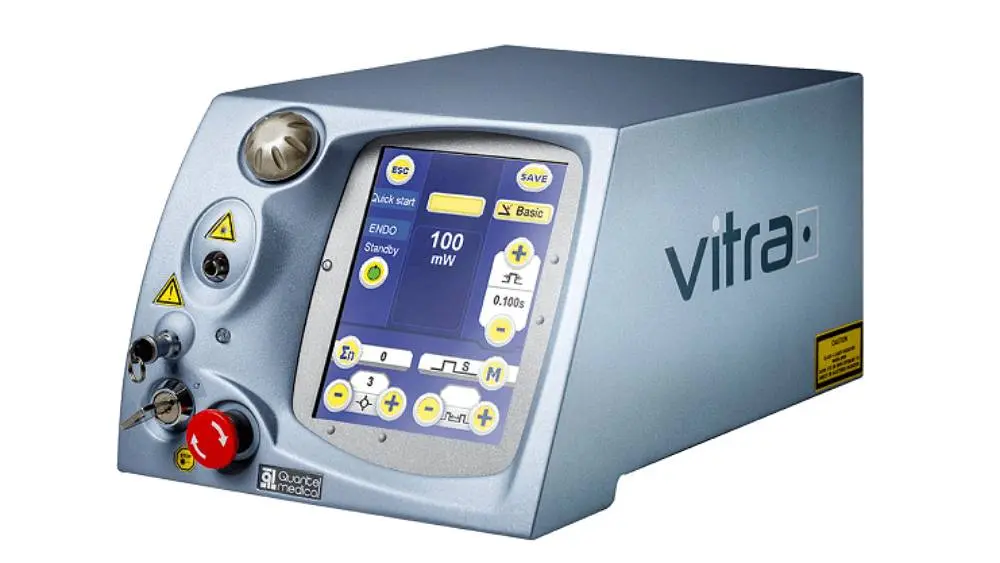

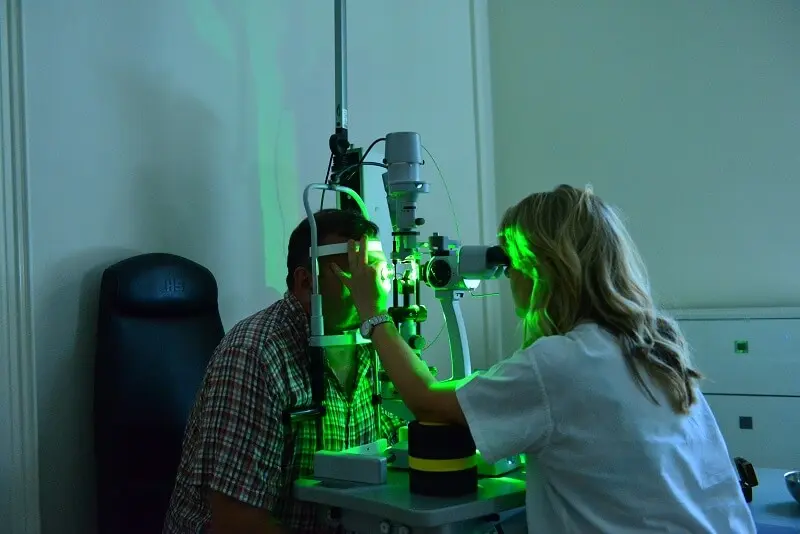
For the treatment of retinal diseases, “green” lasers are used, that is, lasers with a wavelength of 532nm. They are characterized by extremely regular and easily visible “spots” that are well absorbed by the pigment epithelium. Argon or diode lasers are used for panretinal and macular photocoagulation, especially when deeper penetration of the laser beam is required (in cases of diabetic retinopathy and maculopathy).rnrnThese lasers work on the principle of photocoagulation, which involves fine and precise cauterization of the ocular blood vessels. The Vitra Monospot laser system uses the above mentioned efficiency of the “green” 532nm laser, which increases the clinical capabilities in terms of the penetration depth of the laser beam. The 532nm laser has a power of 1200mW. The laser pulse duration is 20ms. Based on the specific condition of the patient’s eyes, the ophthalmologist chooses the wavelength and strength of the laser beam that best suits their technique and the patient’s therapeutic needs. Once the type of laser is selected and the device is connected to the ophthalmic microscope (which provides the ophthalmologist with visual access to the fundus), photocoagulation begins by directing the laser beam to the area of the retina being treated. Application precision is ensured by a red laser diode that emits an aiming beam. After the laser beam hits the retina, a laser “spot” is created that prevents the spread of tears in that direction or “burns” the leaky blood vessel and thus stops intraocular bleeding.
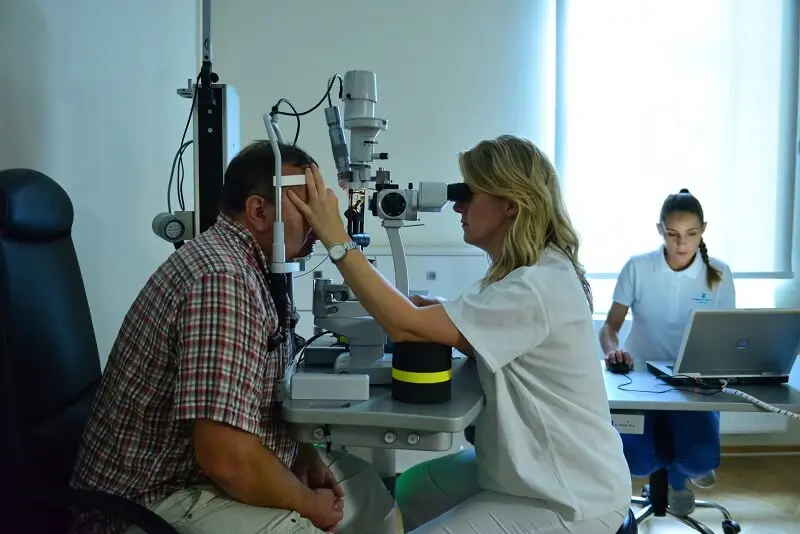
Lasers are the treatment of choice for macular edema, stopping intraocular hemorrhages as a consequence of uncontrolled diabetes, and for the prevention or limitation of retinal tears. Delayed or inadequate treatment of these conditions can lead to retinal detachment and later to permanent loss of vision. The Vitra Monospot laser performs photocoagulation, that is, cauterization of the retinal blood vessels, as well as ablation of pigmented tissue in the eye. In addition to the above conditions and diseases, the Vitra Monospot 532nm laser is also used in the treatment of proliferative diabetic retinopathy, macular degeneration, complicated rhegmatogenous detachment, tractional detachment, proliferative vitreoretinopathy, retinal vascular tumors, as well as in endophotocoagulation and retinopexy. The Vitra Monospot 810nm infrared laser is also indicated for transscleral ablation of the ciliary body, transpupillary photocoagulation, peripheral photocoagulation, age related macular degeneration, etc.
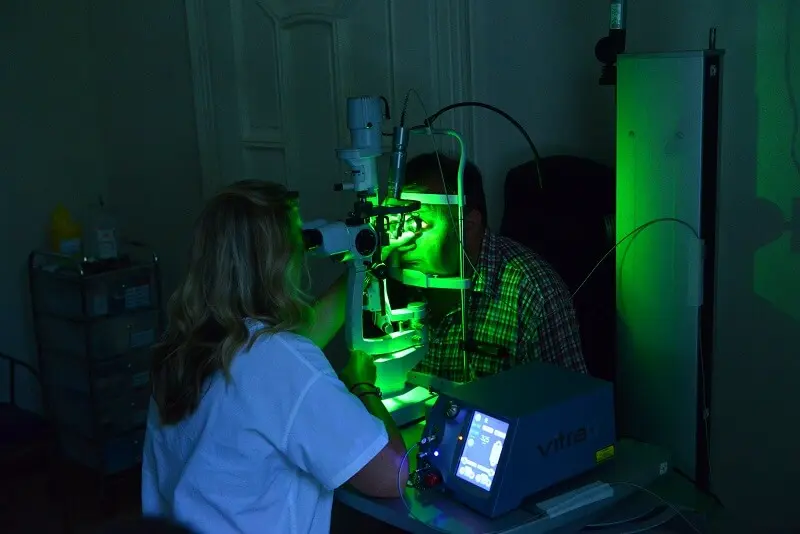
Before the procedure with the Vitra Monospot ophthalmic photocoagulator, the treated eye is anesthetized, which significantly reduces or completely prevents any possible discomfort such as stinging or other unpleasant sensations. A special contact lens is placed on the eye so that, with the use of an ophthalmic microscope, the ophthalmologist has a complete view of the entire fundus and the entire retina. Placing the lens does not cause any pain. The treatment itself lasts about 5–10 minutes per eye, and during this time the patient must stay focused and follow the doctor’s instructions so that the photocoagulation is even and complete.rnrnAfter the procedure, the patient may experience short term, mild visual disturbances, but vision quickly returns to normal. The use of laser technologies in the treatment of retinal diseases has been proven to reduce the risk of severe loss of visual acuity compared to other, more invasive treatment methods.