
Meibomian gland expression – the key to the health of your tear film and clear vision
What are Meibomian glands? Meibomian glands are small glands located in the eyelids that produce the lipid (fatty) component of…

Glaucoma (green cataract), as the second most common cause of blindness in the world, is a serious global and local problem here. Glaucoma is a disease of the optic nerve, a structure that carries visual information from the eye to the vision centers in the brain.
Damage to the optic nerve in glaucoma is most often caused by elevated eye pressure, but it can also occur due to normal eye pressure. The fact that glaucoma occurs much more often in patients suffering from high blood pressure and diabetes, leading world experts attribute damage to the optic nerve to the consequences of poor circulation.
Glaucoma is a chronic disease that lasts for many years without any symptoms and this is its biggest problem. The optic nerve consists of many fibers, and in glaucoma, it is necessary that the damage of these fibers be over 35% in order for the first symptoms to appear. Symptoms represent damage in certain parts of the visual field. By definition, the visual field represents the projection of the retina in space, and in layman’s terms, it represents that part of the space that we perceive around us when we look at one point. Initial symptoms of glaucoma occur in the peripheral parts of the visual field, while central vision is preserved until the final stages of the disease. The evaluation of the preservation of peripheral vision is one of the most important tests when examining glaucoma (green cataracts).
The main role in the evaluation of the preservation of the visual field is played by computerized visual field, an outpatient examination that examines both eyes separately. The computerized visual field is a subjective examination in which the patient actively participates. It is recommended that when a diagnosis of glaucoma is made, that is, glaucoma is suspected, it is repeated every 6 months, while in patients who are already being treated for glaucoma, it is recommended to repeat the visual field every 9 months. If the therapy is changed, visual field testing is advised more often. Modern approaches to the diagnosis and treatment of glaucoma are primarily aimed at catching the disease in the earliest possible clinical phase or, at best, in the phase before it has given symptoms. This is precisely where the importance of examining the visual field lies.
Perfect Vision is an Eye Laser Surgery Center located within the Kuća zdravlja Polyclinic, headquartered in Subotica.
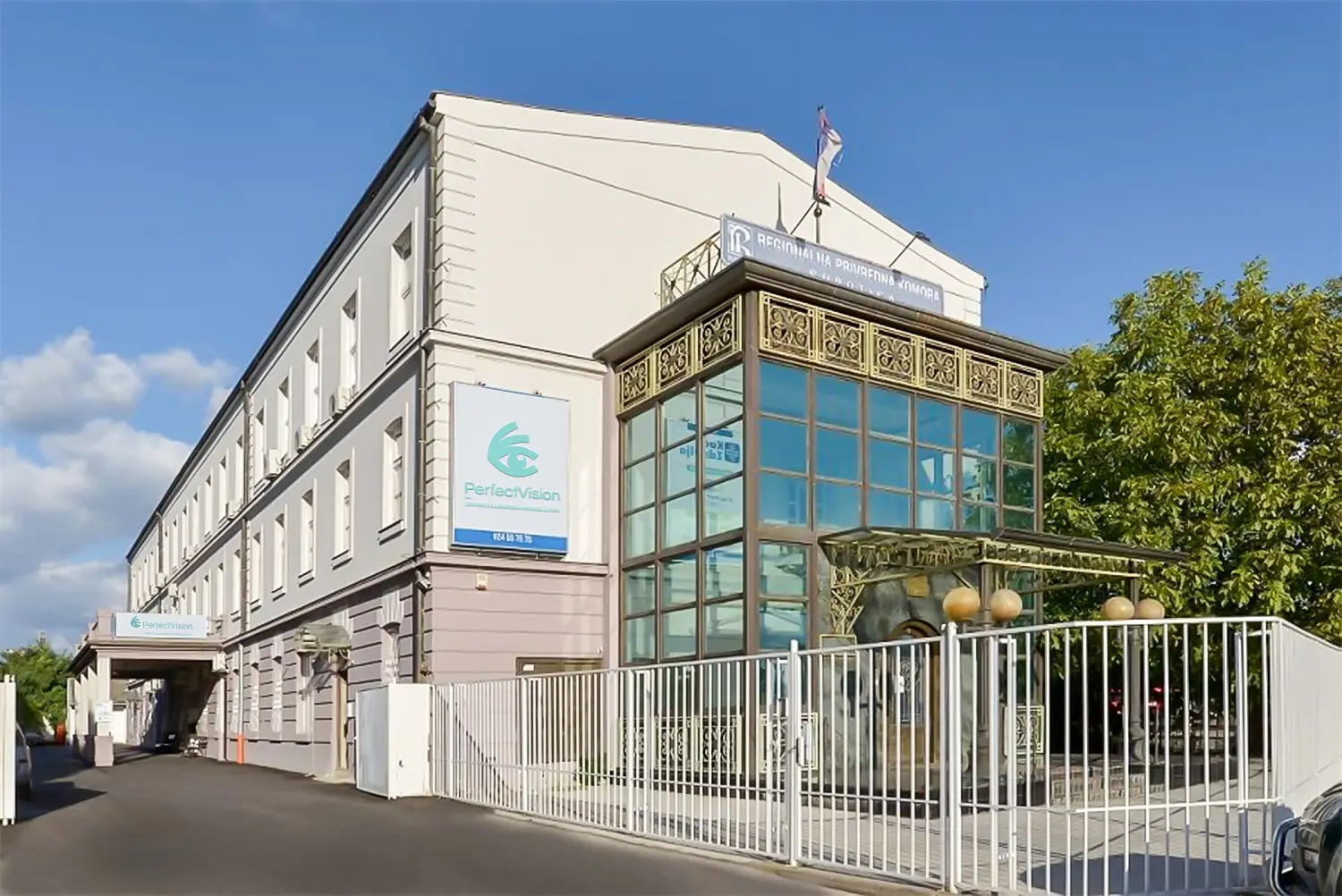


Perfect Vision is a Center for Laser Eye Surgery, located within the Polyclinic House of Health, based in Subotica. Visit us!


We have an ISO certificate according to ISO 9001: 2015, registration number 12 100 59137 TMS for the area of Diagnostic, Conservative and Surgical Ophthalmic Services, issued by the certification body TÜV NORD CERT GmbH.