Meibomian gland expression – the key to the health of your tear film and clear vision
What are Meibomian glands? Meibomian glands are small glands located in the eyelids that produce the lipid (fatty) component of…
If you have any health problem, it is of great importance that you contact the right expert who will be able to provide you with adequate advice and help.
When it comes to vision, ophthalmologists, optometrists and opticians play an important role. Due to ignorance and lack of information, these occupations often multiply, i.e. eye examinations are also performed in opticians, which is wrong.
In the following, we bring you the basic differences between these three professions, which are primarily related to the level of education and level of expertise.
An ophthalmologist is a medical doctor, who is closely specialized in the diagnosis and treatment of eye diseases. This is a specialist who has at least fourteen years of education and training behind him, which makes him trained and licensed to provide services of examination, diagnosis and treatment of eye diseases with the determination of adequate therapy, as well as performing surgical procedures on the eye.
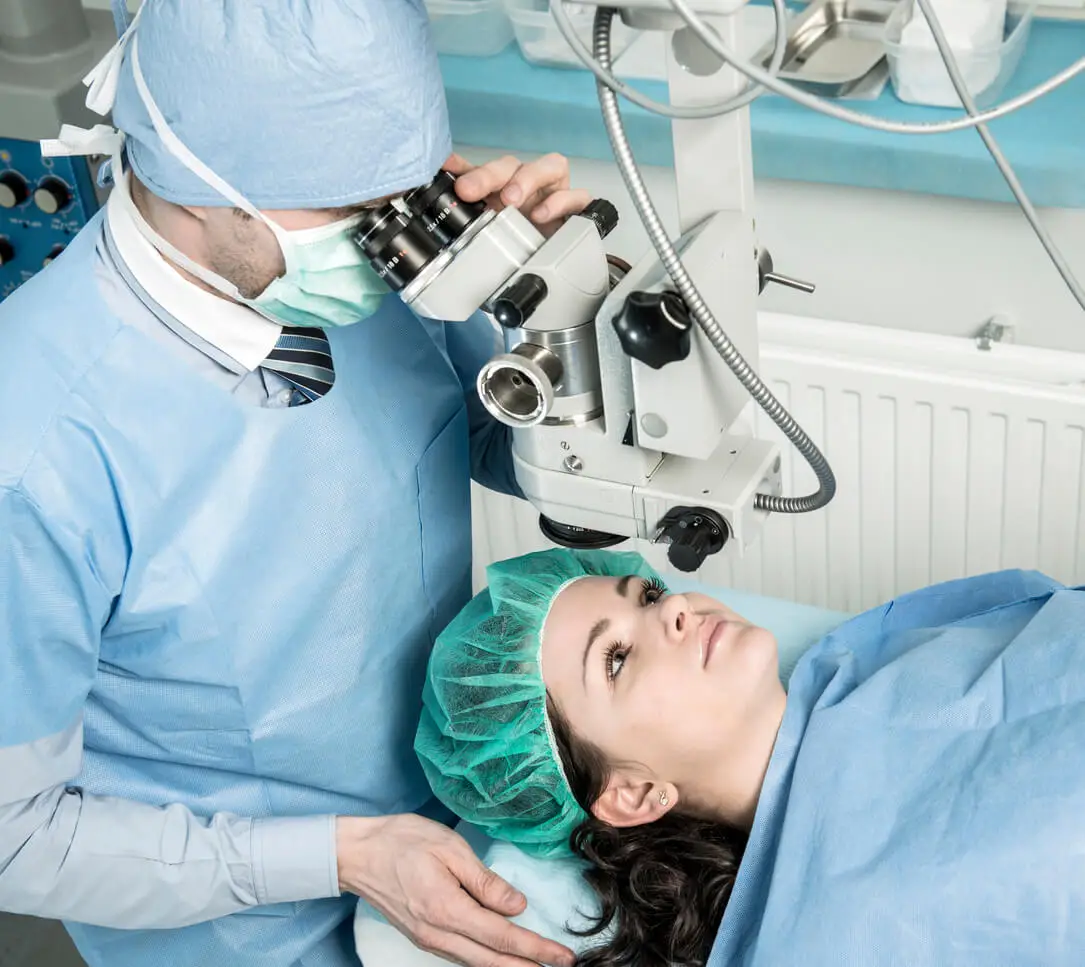
After completing studies lasting at least three years, an optometrist acquires the knowledge to provide primary eye health care. He specializes in performing general eye examinations, i.e. determining visual acuity, prescribing glasses or contact lenses. By examining the front segment of the eye, the optometrist can detect the presence of certain eye diseases, after which he refers the patient to an ophthalmologist.
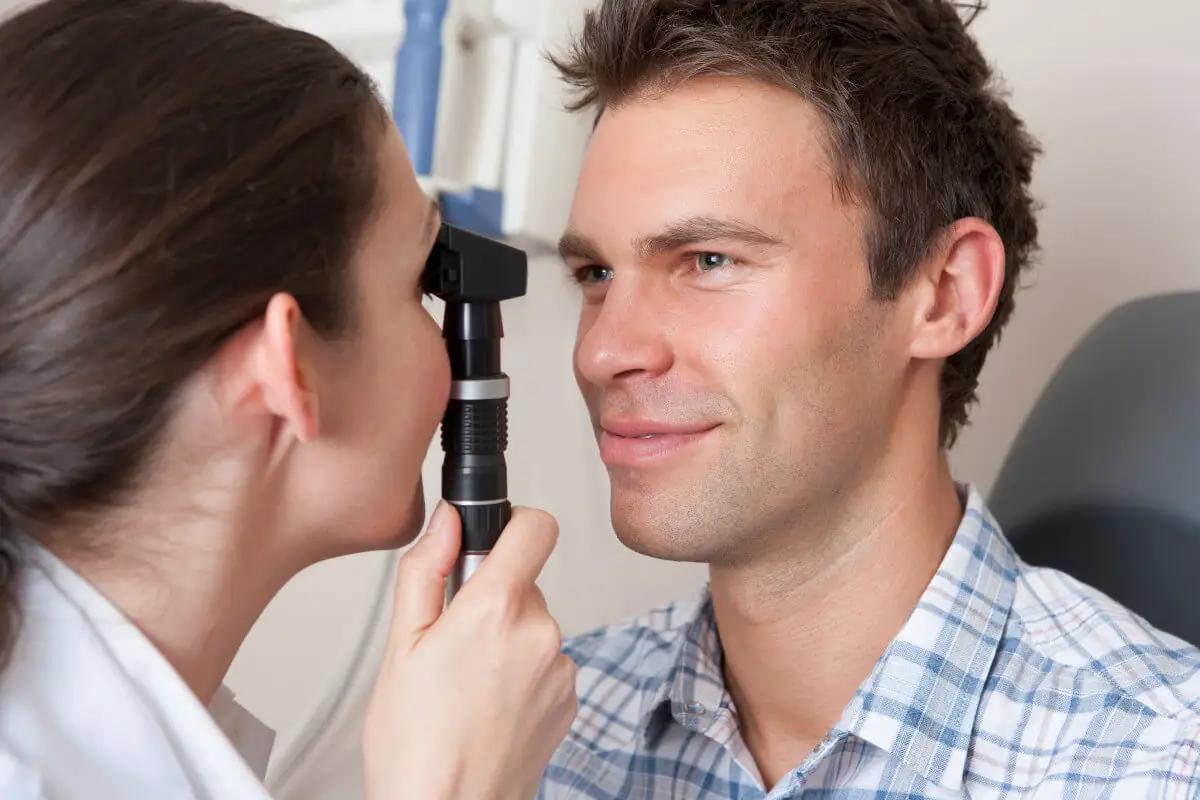
Opticians are technicians, who are trained to manufacture, repair and sell vision correction equipment – glasses and contact lenses. They do this based on prescriptions written by ophthalmologists or optometrists. They are not trained to perform eye examinations, correct vision and prescribe glasses or contact lenses, diagnose eye diseases or prescribe therapy.

A doctor or optometrist will refer you to an optician with a prescription for glasses or contact lenses. In the optician’s shop, you will receive the service of making and selling a prescribed corrective agent.
A routine, general eye examination to determine diopters can be done by an optometrist . At this examination, visual acuity at near and distance is determined, the anterior segment of the eye is examined, the eye pressure is measured and accordingly, adequate correction is determined. Of course, this kind of examination is also performed by an ophthalmologist, so the patient can choose who to trust.
If you need a more detailed examination or if you have been diagnosed with an eye disease (e.g. glaucoma, cataract, macular degeneration , etc.), such an examination can only be performed by an ophthalmologist . A smaller number of ophthalmologists also specialize in surgery, and you will be able to get a complete service from such specialists – from diagnostics to the final cure of eye diseases by surgical intervention, when necessary.
Perfect Vision is an Eye Laser Surgery Center located within the Kuća zdravlja Polyclinic, headquartered in Subotica.
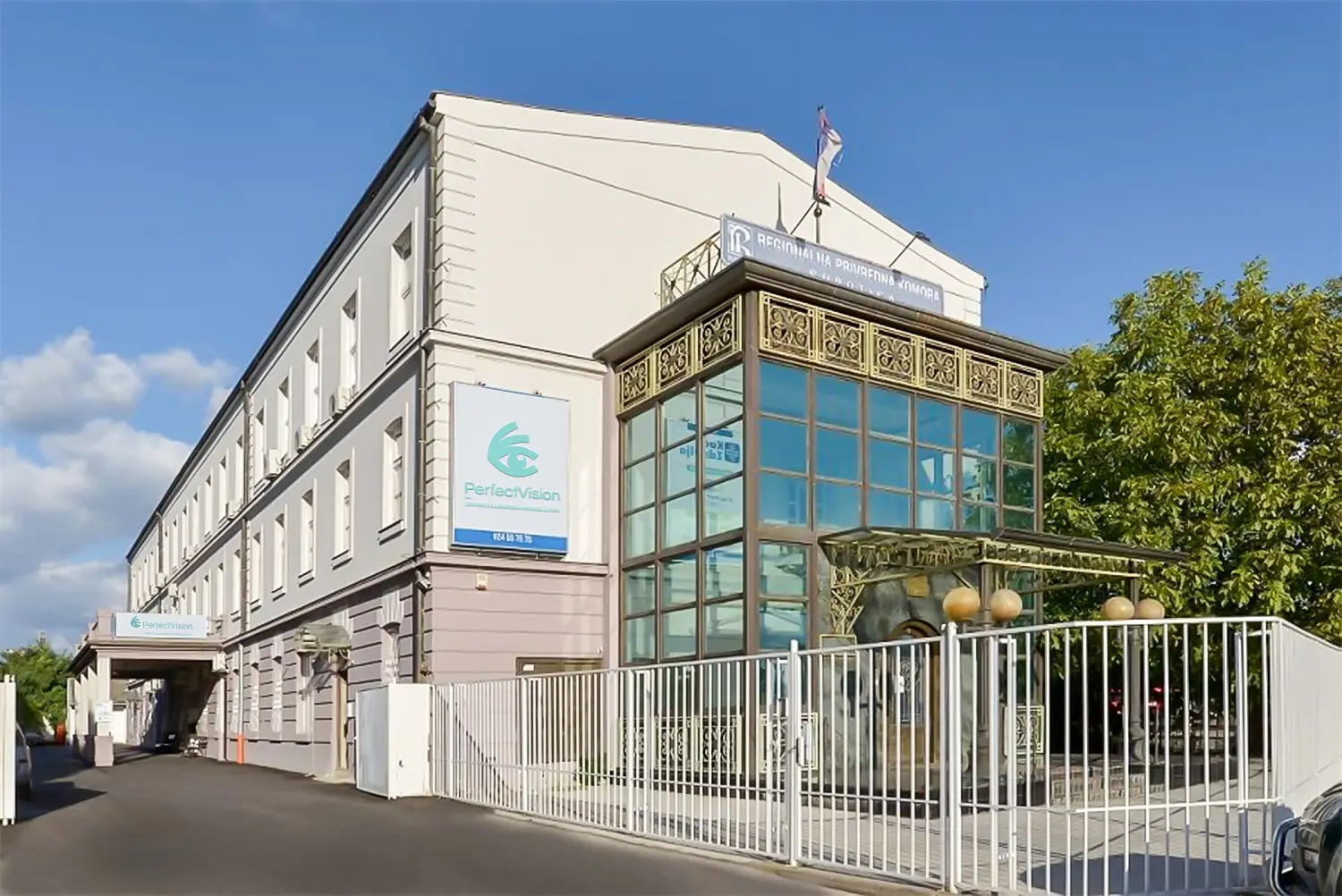


Perfect Vision is a Center for Laser Eye Surgery, located within the Polyclinic House of Health, based in Subotica. Visit us!


We have an ISO certificate according to ISO 9001: 2015, registration number 12 100 59137 TMS for the area of Diagnostic, Conservative and Surgical Ophthalmic Services, issued by the certification body TÜV NORD CERT GmbH.